A lead magnet is a valuable piece of content you offer in exchange for someone's email address. It's your first real conversation with a potential client, and it needs to do more than exist.
It needs to demonstrate your expertise, deliver immediate value, and make someone think, “If this is what they give away for free, imagine what I'd get if I actually hired them.”
The fitness industry added approximately 10 million new gym and studio members in 2026, a 14% year-over-year increase. That's a lot of people looking for guidance.
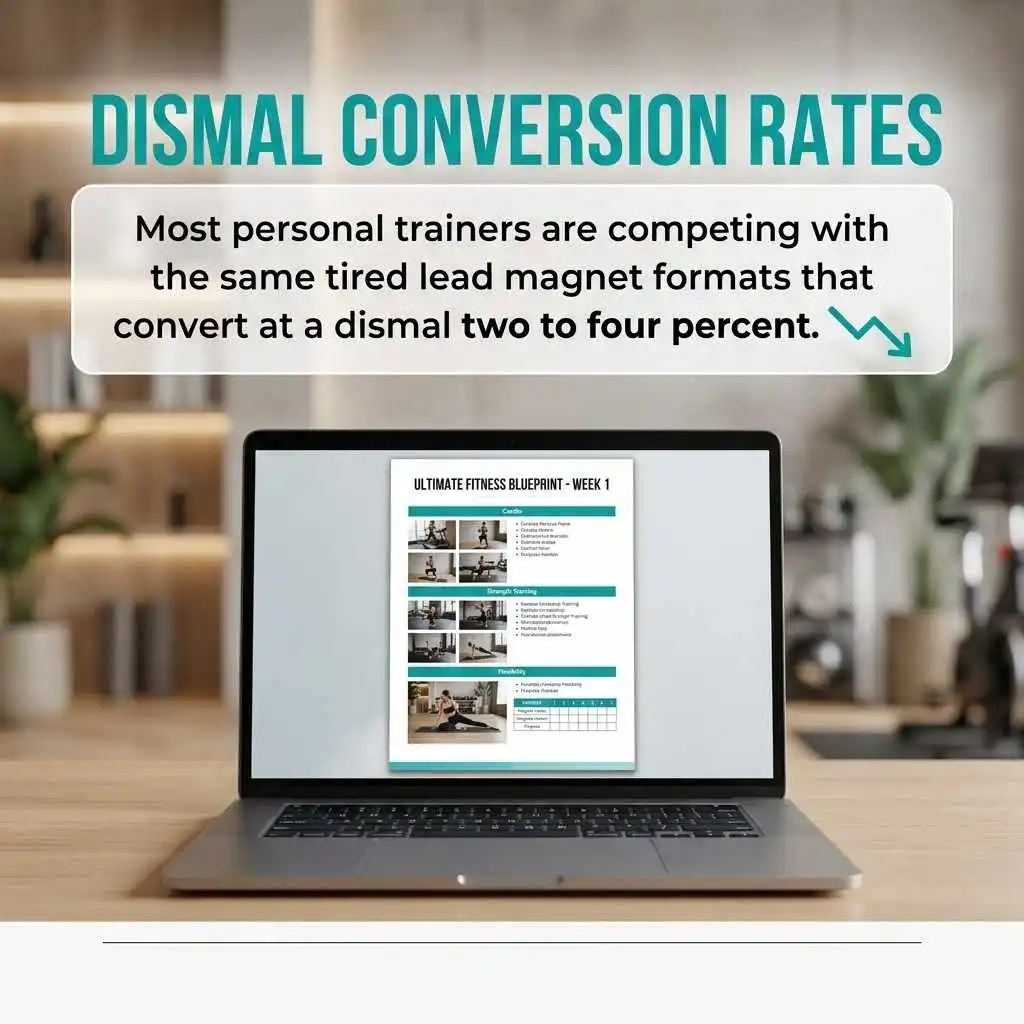
The problem isn't a lack of potential clients. It's that most personal trainers are competing with the same tired lead magnet formats that convert at a dismal 2-4%.
This guide will show you how to create lead magnets that actually work.
We'll cover what makes a lead magnet worth someone's email address, walk through ten high-performing ideas organized by fitness goals, and give you a framework for promoting your lead magnet so it reaches the people who need it most.
The average person guards their inbox. You're not just asking for contact information. You're asking them to trust you with access to one of their most personal digital spaces.
A good lead magnet solves one problem immediately. Not three problems. Not a comprehensive overview of everything related to fitness. One specific, painful problem that your ideal client has right now.
Start by identifying your target audience with precision. Are you after busy parents who need 20-minute workouts they can do at home? Corporate professionals who want to build muscle without spending two hours in the gym? People in their fifties dealing with joint pain who still want to stay active?
The more specific you get, the more compelling your lead magnet becomes. Generic attracts no one. Specific attracts the right people.
Every effective lead magnet shares three characteristics. It's specific, it's immediately actionable, and it demonstrates expertise without requiring someone to become a paying client first.
Specific means narrow. “Get Fit” is not specific. “Lose 10 Pounds in 30 Days Without Giving Up Carbs” is specific. “Build Muscle” is not specific. “Add Half an Inch to Your Arms in 6 Weeks Training 3x Per Week” is specific.
Immediately actionable means your lead magnet delivers a quick win. Someone should be able to use what you give them within 24 hours and see or feel a result. That result creates momentum and trust.
Demonstrating expertise means showing, not telling. Anyone can say they're a great trainer. Your lead magnet proves it by solving a real problem with real guidance that actually works.
Most lead magnets fail because they're too broad, too complicated, or too self-promotional. They try to do too much and end up doing nothing well.
A 50-page ebook on “Everything You Need to Know About Fitness” sounds valuable. It's not. It's overwhelming. No one wants homework. They want help with the specific thing they're struggling with today.
The other common failure is creating a lead magnet that's just a thinly disguised sales pitch. If your free guide spends more time talking about your services than delivering actual value, people will feel tricked. They'll unsubscribe before you get a second chance.
These aren't theoretical. These are lead magnet formats that work because they solve real problems for real people at specific stages of their fitness journey.
Each idea includes what it is, why it works, and who it's best for. Pick the one that aligns with your expertise and the specific type of client you want to attract.
Weight loss is the single biggest reason people search for a personal trainer, so these three formats are built to meet that intent immediately with something people can act on today.
This is a week's worth of breakfast, lunch, dinner, and snack ideas organized by day, complete with portion sizes and a grocery list. It works because nutrition is where most people get stuck when trying to lose weight, and decision fatigue kills progress.
Make it specific to a goal. “7-Day Meal Plan for Busy Parents” or “7-Day High-Protein Meal Plan for Women Over 40” will outperform a generic meal plan every time. Include macros if your audience cares about that level of detail, but don't assume everyone does.
The shopping list is what makes this actionable immediately. Someone can download your lead magnet, go to the grocery store, and be eating your recommended meals by dinnertime.
This is an interactive tool, usually a simple web-based calculator, that tells someone exactly how many calories they should eat to reach their weight loss goal, broken down by protein, carbs, and fat.
It works because it's personalized. Generic advice is easy to ignore. When someone enters their own data and gets a number specifically for them, it feels more real and more urgent.
You can build this with a simple public Google Sheet, or use a tool like Typeform to collect inputs and deliver results. The key is making the math invisible and the result clear.
This is a structured 30-day program with daily workouts, habit check-ins, and progress tracking. It works because it removes the guesswork and creates accountability through structure.
People love challenges. They're time-bound, they create urgency, and they tap into the psychology of commitment. If someone says they're doing a 30-day challenge, they're more likely to follow through than if they're just “trying to work out more.”
Include a daily checklist and space for tracking weight, measurements, or how they feel. The act of tracking creates awareness, and awareness drives behavior change.
Building muscle takes longer to show results than weight loss, so these three formats work best when they provide a clear plan and a way to track progress.
This is a complete workout plan with exercises, sets, reps, and progression guidance for four weeks. It works because beginners don't need more information. They need a clear plan and permission to start simple.
Most new lifters are intimidated by the gym. They don't know what to do, they're afraid of looking foolish, and they worry about getting injured. A structured program solves all three problems.
Include exercise demonstrations. You can link to YouTube videos or create your own short clips. Visual guidance makes the difference between someone actually doing the workout and abandoning it after day one.
This is a detailed guide to building bigger arms, shoulders, and chest. It includes exercise selection, volume recommendations, and programming strategies for muscle growth.
It works because it's specific to a goal most men care deeply about. If your target audience is guys who want to build muscle, this lead magnet speaks directly to their needs.
Include the science, but keep it accessible. Explain why you're recommending 8-12 reps for hypertrophy or why you prioritize compound movements. Educating your audience builds trust and positions you as someone who knows what they're doing.
This is a simple spreadsheet or printable PDF that lets someone log their workouts and track whether they're increasing their weight, reps, or sets over time.
It works because progressive overload is the key to building muscle, but most people don't track it. They show up, do some sets, and wonder why they're not getting stronger. This gives them a system.
Make it brain-dead simple. Include pre-filled exercise examples and clear instructions for how to use them. The easier you make it, the more likely someone will actually use it.
This last group covers people who aren't chasing a single number on the scale or the bar, so these three formats work best when they help someone build structure and self-awareness around fitness in general.
This is a self-assessment tool that helps someone evaluate their current fitness level across strength, endurance, flexibility, and mobility. It works because it raises awareness and provides them with a starting point.
Most people don't know where they stand. They have a vague sense that they're out of shape, but they don't have data. This checklist gives them that data and, more importantly, shows them where to focus first.
Include scoring guidelines and recommended next steps based on their results. If someone scores low on mobility, recommend mobility drills or a follow-up resource you offer.
This is a buying guide for home gym equipment. It includes recommendations organized by budget, space, and fitness goals. It works because home training is still hugely popular, and people are overwhelmed by options.
You're not selling equipment. You're helping someone make a smart purchase. Include links to specific products on Amazon or other retailers. Use affiliate links if you want, but disclose that clearly.
What makes this valuable is curation. There are 10,000 resistance bands on Amazon. Your job is to recommend the three that are actually worth buying and explain why.
This is a blank weekly planner designed specifically for scheduling workouts. It includes prompts for tracking energy, sleep, and recovery alongside training sessions.
It works because consistency is the hardest part of fitness, and scheduling creates commitment. When someone writes down “Leg Day, Tuesday, 6 AM,” they're significantly more likely to show up than if they're just trying to “fit it in.”
Include tips for building sustainable workout habits. That's where your expertise shines. Anyone can make a blank calendar. You can explain why training on specific days matters, how to build rest into a program, and what to do when life gets chaotic.
This is a series of three to five short videos, each 5-10 minutes long, demonstrating mobility drills for specific areas: hips, shoulders, spine, and ankles.
It works because mobility is something everyone needs and almost no one prioritizes. People feel stiff; they know they should stretch, but they don't know what to do or how long to do it.
Video is powerful for movement instruction. Seeing you demonstrate proper form is infinitely more valuable than reading a description. Host the videos on YouTube (unlisted) or Vimeo, and deliver the links via email after someone opts in.
Your lead magnet isn't the end goal. It's the entry point into a relationship. The real value comes from what happens after someone downloads your free resource.
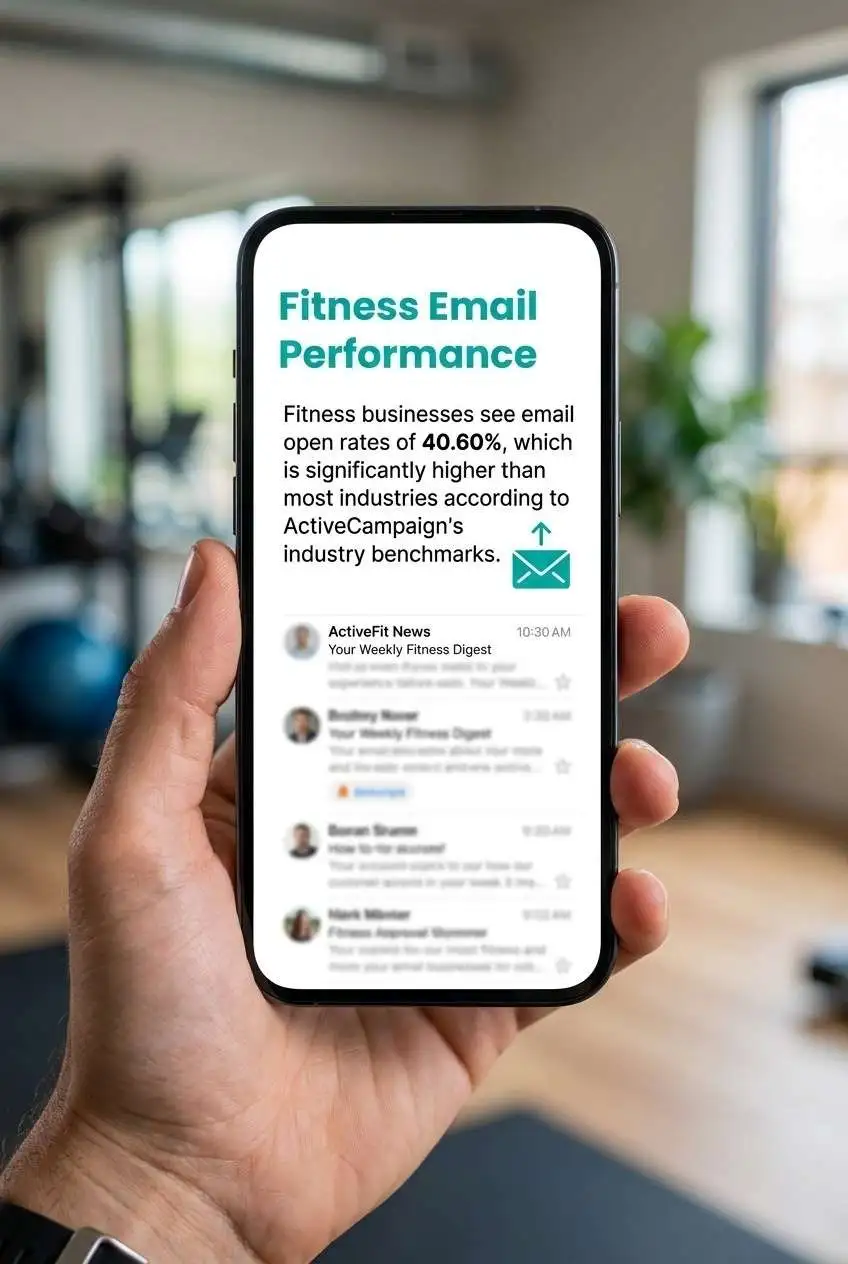
This is where email marketing becomes business-building. According to ActiveCampaign's industry benchmarks, fitness businesses see email open rates of 40.60%, significantly higher than in most other industries.
People who care about fitness want guidance, and email is still the best channel for delivering it.
Once someone opts in for your lead magnet, you have permission to start a conversation. This is where many trainers fail. They collect email addresses and then do nothing with them, or they immediately pitch their services and scare people off.
The first email should acknowledge what they just downloaded and give them one more piece of value. If they grabbed your meal plan, send them a bonus recipe or a quick tip on meal prep. If they took your workout program, send them a video on proper form for the first exercise.
Then, over the next 7-14 days, send a series of emails that build trust, demonstrate expertise, and naturally lead to an offer for your paid services. This is called a welcome sequence, and it's your best opportunity to convert a lead into a paying client.
Not everyone who joins your email list wants the same thing. Someone who downloaded a weight-loss meal plan is in a different place than someone who grabbed your muscle-building program.
Use an email marketing platform like Mailchimp or ActiveCampaign to tag people based on the lead magnet they chose. Then, send them follow-up content that's relevant to their specific fitness goals.
This level of personalization makes your emails feel like they're written specifically for the person reading them. Because, in a way, they are.
Most trainers worry about coming across as too salesy. The solution isn't to avoid selling. It's to sell in a way that feels like helping.
After someone has engaged with your content, opened a few emails, maybe replied to one, you've earned the right to make an offer. Frame it as the logical next step. “You've been following the free 4-week program. Ready to keep building strength with personalized coaching?”
The key is timing and context. Don't pitch in your first email. Don't pitch in every email. But pitch when it makes sense and when you've provided enough valuable content that someone sees your paid offer as an opportunity rather than an interruption.
Your lead magnet demonstrates what you know and how you help people. It should feel like the best free thing someone has ever gotten from a trainer.
That doesn't mean it needs to be 100 pages long or include every piece of knowledge you've ever accumulated. It means it should be polished, professional, and genuinely useful.
You don't need to be a graphic designer, but your personal trainer brand and lead magnet shouldn't look like they were thrown together in 10 minutes.
Use Canva to create clean, professional-looking PDFs. Choose readable fonts, use your brand colors, and include your logo.
Presentation signals credibility. If your lead magnet looks amateurish, people will assume your training is too. If it looks professional, they'll give you the benefit of the doubt and engage with the content.
Include your contact information and a call to action at the end. Make it easy for someone to take the next step, whether that's booking a consultation, following you on social media, or checking out your paid programs.
Your lead magnet should sound like you. If you're casual and conversational in person, write that way. If you're more technical and detail-oriented, let that come through.
Authenticity builds connection. People don't hire trainers just for workout plans. They hire trainers they like, trust, and feel comfortable working with. Your lead magnet is where that relationship starts.
Avoid fitness industry jargon unless your audience already speaks that language. If you're targeting beginners, explain concepts in plain terms. If you're targeting experienced lifters, you can use more technical language because it signals you understand their world.
Your first lead magnet won't be perfect. That's fine. The goal is to get it out there, see how it performs, and improve it over time.
Track your conversion rate. If you're driving 100 people to your landing page and only 2 are opting in, something's wrong. According to Outgrow's conversion research, generic downloadable workout plans typically convert between 2% and 4%, while interactive tools can convert at much higher rates.
Ask for feedback. Send a follow-up email a week after someone downloads your lead magnet and ask what they thought. Was it helpful? Was anything confusing? Would they recommend it to a friend?
Use that feedback to refine your lead magnet. Update the content, improve the design, adjust the messaging. Small improvements compound over time, turning a decent lead magnet into a powerful one.
The best lead magnet in the world doesn't matter if no one knows it exists. Promotion is where most trainers drop the ball. They create something valuable and then just hope people find it.
You need a deliberate strategy for getting your lead magnet in front of potential clients. That strategy should include multiple channels and consistent effort over time, built around the promotional tactics that already work for your business.
Your lead magnet needs a dedicated landing page. This is a single page with one goal: to convince someone to enter their email address in exchange for your free resource.
Keep it simple. Include a clear headline that states the benefit, 3-5 bullet points explaining what's inside, a compelling image (like a mockup of your PDF or a photo of you), and an opt-in form.
Keep the opt-in form short: just an email address and a first name. Every extra field, phone number, fitness goals, and workout history drops your completion rate. You can learn the rest through your emails and follow-up conversations later. Right now, the only job is making it as frictionless as possible to say yes.
Remove distractions. No navigation menu. No links to other pages. No sidebar. The only action someone can take is to opt in or leave. That level of focus dramatically improves conversion rates.
Use a landing page builder like Unbounce, Leadpages, or even Wix if you're on a tight budget. Many email marketing platforms include landing page builders as part of their service.
Promote your lead magnet regularly on Instagram, Facebook, YouTube, or wherever your potential clients spend time. Don't post about it once and move on. Make it a recurring part of your content strategy.
Create content that teases the value inside. If your lead magnet is a meal plan, post a sample recipe. If it's a workout program, post a video demonstrating one of the exercises. Give people a taste of what they'll get and then direct them to your landing page.
Use the link in your Instagram bio to send people to your landing page. Post about your lead magnet in Facebook groups where your target audience hangs out. Create a YouTube video that provides value on its own and mentions the lead magnet as a next step.
Consistency matters more than virality. You're better off posting about your lead magnet once a week for six months than hoping one post blows up.
Your lead magnet isn't just for cold leads. Use it in your conversations with warm prospects too, and lean on the same tactics you'd use to find personal training clients. When someone asks about your services but isn't ready to commit, offer your lead magnet as a low-pressure way to start working together.
“I'd love to work with you, but I get that you're not ready to jump into coaching yet. Why don't you grab my free 4-week strength program? It'll give you a sense of how I structure training, and we can reconnect after you've had a chance to try it.”
This keeps the door open without being pushy. It gives someone a chance to experience your coaching philosophy risk-free. Many of your best clients will come from this path, people who tried your free stuff, loved it, and came back ready to pay.
Once you've got the basics working, these strategies help you squeeze more value out of every lead, higher conversion rates, better-qualified prospects, and a lower cost per lead across the board.
Static PDFs work, but interactive lead magnets convert at significantly higher rates. According to a 2026 lead magnet conversion benchmark analysis that synthesizes data from multiple industry reports, interactive tools convert at 2.4 times the rate of static PDFs.
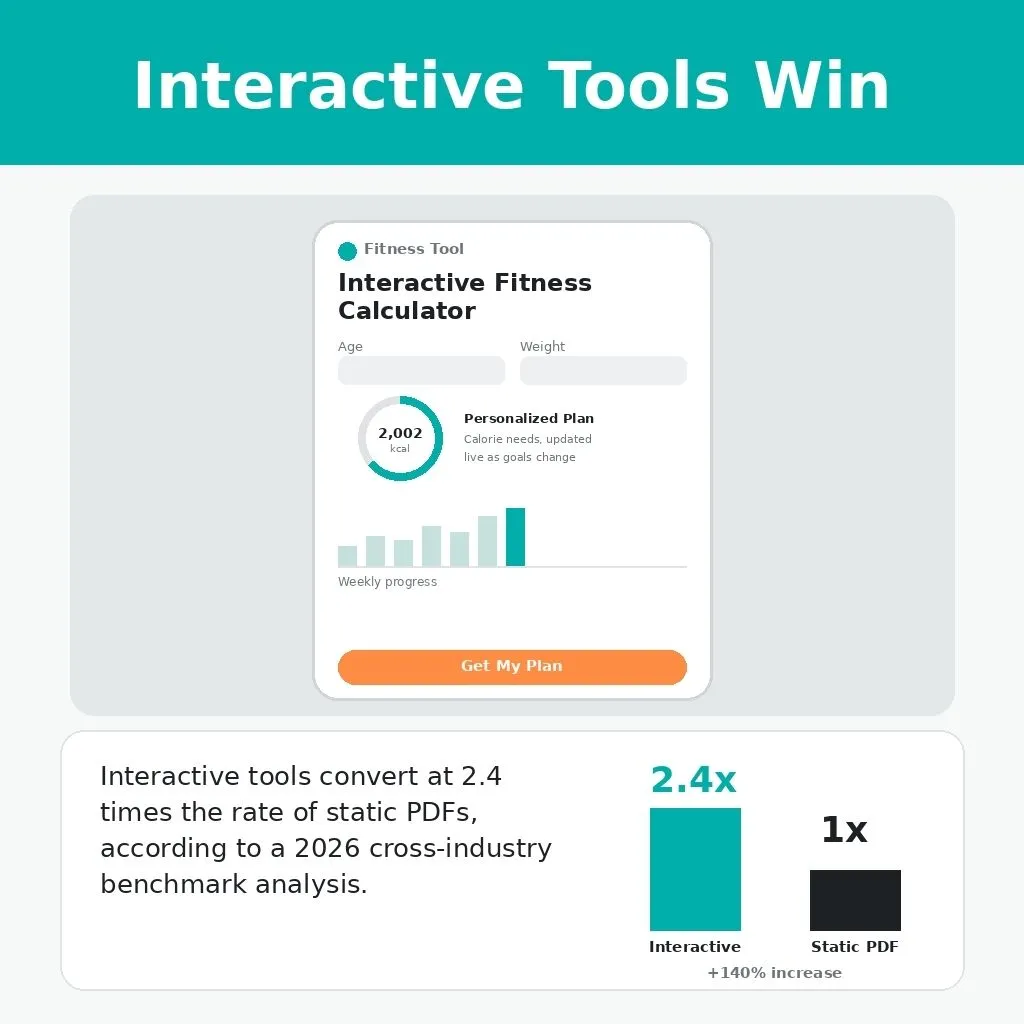
Interactive lead magnets include quizzes, calculators, assessments, and web-based tools that personalize results based on user input. They feel more valued because the information is customized rather than generic.
A simple example: instead of offering a generic workout plan, offer a quiz that asks about someone's fitness level, goals, and available equipment, then generates a customized 4-week program based on their answers.
Tools like Typeform, Outgrow, or Interact make it relatively easy to build these experiences without needing to code. The upfront effort is higher, but the payoff in engagement and conversions makes it worth it.
Once someone's downloaded your lead magnet and engaged with your content, they're more likely to refer friends. Make this easy by creating a referral version of your lead magnet.
At the end of your PDF or in a follow-up email, include a line like, "Know someone who could use this? Forward them this link so they can grab their own copy." Include a unique referral link so you can track who's sharing your content.
You can even gamify it: "Refer three friends and get my advanced nutrition guide for free." This costs you nothing and serves as a light, top-of-funnel referral loop, distinct from a formal referral program, in which paying clients refer new paying clients in exchange for a real reward.
The two work well together: one gets people in the door, the other turns your existing clients into a growth channel.
If you're not tracking results, you're guessing. Set up basic analytics to understand how your lead magnet is performing and where you can improve.
Start with your opt-in rate. This is the percentage of visitors to your landing page who actually enter their email address. A 20-40% opt-in rate is solid. Below 10% means something's broken, either your messaging, your offer, or the technical setup of your page.
Next, track email open and click-through rates in your follow-up sequence, and use website lead-generation data to see where visitors drop off. If people are opting in but not opening your emails, your subject lines need work. If they're opening but not clicking, your email content isn't compelling enough, or your calls to action are unclear.
Track conversion to paying client. This is the ultimate metric. How many people who downloaded your lead magnet eventually hired you for coaching? This might take weeks or months to materialize, but it's the number that actually matters for your business.
Cost per lead is worth tracking, too. It averages around $57 across the fitness industry, though well-optimized campaigns for personal trainers often bring that down closer to $25 across most channels. Knowing your number tells you whether a lead magnet is actually paying for itself or quietly draining your ad budget.
Use tools like Google Analytics to track landing page visitors and conversions. Your email marketing platform will automatically provide open and click data. Keep a simple spreadsheet to track how many leads came from each source and how many became clients.
Small changes can have big impacts on performance. Test different versions of your landing page headline, your lead magnet title, and even the design of your opt-in form.
Change one variable at a time. If you change your headline and your image simultaneously, you won't know which change drove the improvement. Test for at least a week or until you have at least 100 visitors to each version before drawing conclusions.
Most landing page builders include A/B testing functionality built right in, and that's usually your easiest option since everything stays in one place. If yours doesn't, a dedicated funnel builder like ClickFunnels or Instapage typically supports split testing, and some email marketing platforms with landing page tools, such as MailerLite, also offer it.
Yes. Lead magnets remain one of the most effective ways to grow your email list and attract potential clients, provided they're targeted, valuable, and aligned with where someone is in their fitness journey. Research consistently shows that offering useful gated content increases both lead volume and conversion rates, especially when paired with strong email follow-up.
A lead magnet should solve a specific problem immediately, demonstrate your expertise, and move someone naturally toward the next step in working with you. It must deliver real value, not just collect email addresses. The best lead magnets make someone think, “If this is free, imagine what the paid stuff is like.”
The most effective fitness lead magnets are action-oriented and specific: downloadable workout plans, nutrition guides, goal-setting worksheets, short video series, email challenges, and calculators. They work because they provide concrete tools that improve exercise adherence and engagement, which makes them attractive to people who are serious about making progress.
Lead magnets work when they're specific, valuable, and easy to use. Most personal trainers fail at lead generation because they create generic resources that try to appeal to everyone and end up resonating with no one.
Your lead magnet should solve one real problem for one specific type of person. It should demonstrate your expertise without requiring someone to pay you first. And it should naturally lead into a conversation about your coaching services for people who want more.
Build your lead magnet, set up your landing page, and promote it consistently. Track your results, refine your approach, and keep improving. The trainers who build strong email lists now are the ones who'll have thriving online coaching businesses for years to come.
Ready to deliver better results to the clients you already have? PT Distinction gives you everything you need to run your online and hybrid coaching business in one place, from program delivery and habit tracking to client communication and progress reporting.
Once your lead magnets start converting, you'll need a platform that can handle the coaching at scale. Start your free 1-Month trial and see why thousands of trainers worldwide trust PT Distinction to power their coaching.
Ready to join the family?
We'll get you up and running in no time. Start with our zero-risk free trial and build your personal training empire today.