


A well-designed weight-loss program for clients combines a measurable energy deficit, phased resistance training, cardiorespiratory training across progressively higher heart-rate zones, and behavior-change strategies to keep clients engaged beyond the first month.
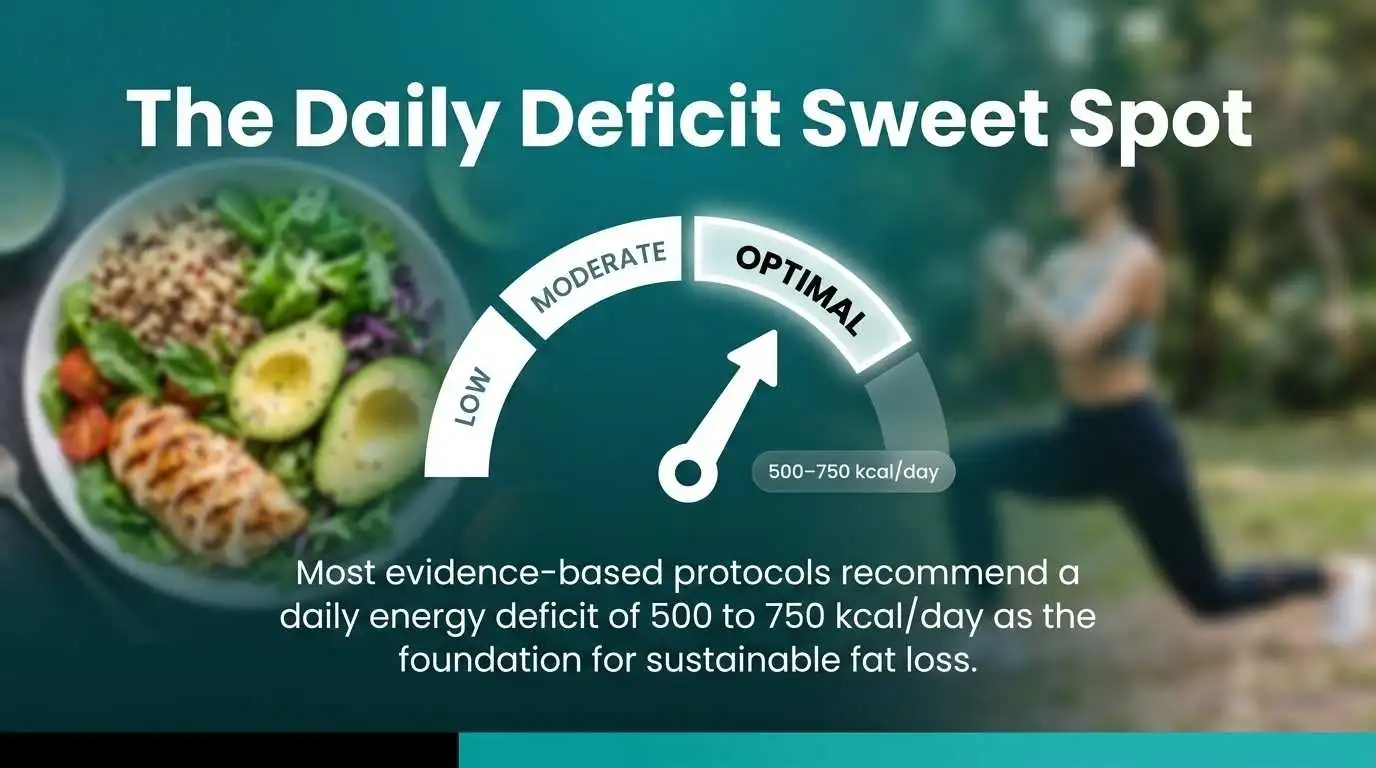
According to clinical weight-loss guidelines, most evidence-based protocols recommend a daily energy deficit of 500-750 kcal/day as the foundation for sustainable fat loss.
Research published in PubMed confirms that the most effective regimen for obesity management combines strength and endurance exercise for at least 175 minutes per week. Get the structure right from the start, and the results follow.
Most trainers know the basics. But there is a big gap between knowing that clients need to eat less and move more and actually building a program that works in the real world, week after week, for a real person with a job, a family, and a complicated relationship with food. That gap is what this guide is for.
Every effective weight-loss program for clients is built on one physiological principle: the body must expend more energy than it takes in. That is not an opinion. It is thermodynamics.
The practical implication for program design is that exercise alone rarely produces sufficient caloric expenditure to drive meaningful fat loss without dietary change.
A 45-minute resistance training session burns a meaningful number of calories, but not enough to offset a poor diet. This is why the most effective programs treat exercise and nutrition as inseparable parts of the same system.
That said, the energy deficit target matters. With too aggressive a deficit, clients lose lean body mass, drop their resting metabolic rate, and feel terrible. Too conservative and progress stalls.
The 500-750 kcal/day range is the sweet spot most guidelines land on, and it is the target to build toward across the program's phases.
One more number worth knowing: CDC data show that the prevalence of obesity among U.S. adults was 40.3% from August 2021 through August 2023.
That is a significant portion of the population actively looking for qualified help. For a personal trainer, weight-loss program design is not a niche specialty. It is the core business.

Before writing a single set or rep, a personal trainer needs four things from every client: their current health status, their activity history, their realistic schedule, and their actual reason for wanting to lose weight.
That last one is where most program design falls apart.
Weight loss is consistently cited as the top motivating factor for clients hiring personal trainers. But “I want to lose weight” is not a goal. It is a category. The real goal lives underneath it, and finding it changes how you design everything.
Ask clients what losing weight would allow them to do. Not how they want to look. What they want to do. Play with their kids without getting winded. Fit into a specific piece of clothing. Complete a 5K. These concrete outcomes become the anchors for goal setting throughout the program.
For goal setting, use SMART criteria: specific, measurable, achievable, relevant, and time-bound.
A goal like “lose 1 pound per week for 12 weeks” is actionable. “Lose weight” is not. Clients who have clear, personally meaningful goals are more likely to stick with the process when the early motivation fades. You can find a full breakdown of this process in our guide on setting client fitness goals.
A useful baseline assessment for weight-loss clients includes resting heart rate, blood pressure, body composition (or, at a minimum, circumference measurements), a movement screen, and a cardiorespiratory fitness test.
These data points do three things: they flag contraindications, they inform starting intensities, and they give you a baseline to measure progress against.
Collect what you will actually use. A 20-point assessment that you never revisit is less useful than five measurements tracked consistently every four weeks.
PT Distinction's built-in Assessments feature lets you record resting heart rate, body measurements, movement screens, and cardiorespiratory scores directly in the platform, so baseline data and training plans live in one place, and every progress check is one click away.
Progress tracking is one of the strongest behavioral tools you have. Clients who see evidence of change stay in the program.
Phase 1 of a weight-loss program for clients focuses on improving movement quality, joint stability, and basic aerobic capacity before adding significant training load.
This phase typically runs four to six weeks and sets the foundation on which everything else depends.
New clients and clients returning after a long break almost always have movement compensations that will become injuries under higher loads. Starting with stabilization work is not babying them. It is protecting your investment in their long-term progress.
In Phase 1, resistance training emphasizes higher repetitions at lower loads with moderate rest intervals.
The goal is to build connective tissue resilience, establish motor patterns, and begin increasing total weekly caloric expenditure through structured movement.
Recommended parameters for Phase 1 resistance training:
Exercise selection in this phase prioritizes compound, multi-joint movements: squats, hinges, rows, and presses.
These recruit more muscle mass per movement than isolation exercises, which means higher caloric expenditure per session. That matters for a weight loss program.
PT Distinction's AI Program Builder feature can generate phased workout plans like this in minutes, structured around your chosen parameters and automatically progressable as clients move from Phase 1 through to Phase 3.
The aerobic base built in Phase 1 directly supports fat oxidation. Training in Zone 2 (roughly 60 to 70% of maximum heart rate) teaches the body to use fat as a primary fuel source efficiently.
For most deconditioned clients, this zone is lower intensity than they expect. That is fine. Consistency matters more than intensity at this stage.
Start with 20 to 30 minutes of continuous cardiorespiratory training, three days per week. Walking, cycling, and swimming all work. The format matters less than the heart rate target and the habit's consistency.
Building toward 150 minutes per week is the evidence-based threshold at which weight-loss effects become reliably measurable, per research on weight management.
For practical guidance on structuring and scheduling these sessions throughout the week, our article on scheduling client workouts covers the sequencing logic in detail.
Phase 2 of a weight-loss program increases training load and metabolic demand by introducing strength-endurance protocols, superset training, and higher caloric expenditure per session.
This phase typically runs four to eight weeks after clients have completed the stabilization phase.
The shift from Phase 1 to Phase 2 is where many trainers underestimate what their clients are ready for. If Phase 1 was done properly, clients have built the foundation. Now is the time to make the sessions genuinely hard.
In Phase 2, the training focus shifts toward strength endurance, which lies at the intersection of building lean body mass and maintaining high metabolic demand. Higher volume, moderate loads, and shorter rest intervals are the tools.
Recommended parameters for Phase 2 resistance training:
Superset training is worth calling out specifically. Pairing opposing muscle groups with minimal rest intervals keeps heart rate elevated throughout the session, effectively combining strength training and cardiorespiratory stimulus.
That is more work done in less time, which matters for clients with tight schedules.
Type I muscle fibers (slow-twitch) are fatigue-resistant and fat-preferring. Type II fibers (fast-twitch) produce more force and burn more calories acutely. A well-designed weight-loss program trains both.
Phase 2 recruits more Type II fibers at higher loads. This increases excess post-exercise oxygen consumption (EPOC), meaning clients continue burning calories at an elevated rate after the session ends.
Hypertrophy in Phase 2 is a byproduct of strength endurance work. Clients who build more lean body mass increase their resting metabolic rate over time, making the energy deficit easier to maintain without dramatically cutting calories.
That is the compounding benefit of resistance training that cardiorespiratory training alone cannot replicate.
Phase 3 of a weight loss program introduces power-based training protocols that generate the highest metabolic demand of any training phase, making them the most effective tool for maximizing total caloric expenditure per session.
This phase is appropriate for clients who have completed Phases 1 and 2 and have demonstrated stable movement mechanics under load.
Power training is an underused part of weight-loss program design. Most trainers stop at strength endurance and never get here. That is a missed opportunity, especially for clients who have plateaued.
Power training at this stage does not mean Olympic lifting. It means training with greater intent and speed, using exercises such as medicine ball throws, kettlebell swings, squat jumps, and sprint intervals.
The goal is peak force production in shorter time frames, which spikes metabolic demand more than slower, heavier lifts.
Recommended parameters for Phase 3 resistance training:
The combination of strength and endurance exercise at 175 or more minutes per week is the most efficient regimen for obesity management in adults, according to published research.
Phase 3 is when clients hit that threshold while also maximizing explosive metabolic demand to accelerate fat loss.
Progressive overload is the thread running through every phase. Without it, adaptation stops. The program stops working. Clients plateau and blame themselves.
Track it explicitly. Load, volume, density, and complexity are all variables you can manipulate. Moving from Phase 1 to Phase 2 to Phase 3 is itself a progressive overload strategy.
Within each phase, increase at least one variable every one to two weeks. Our resource on effective online training programs covers how to build this progression into a structured program.
Cardiorespiratory training in a weight-loss program is structured around specific heart rate zones that shift across the three training phases, from aerobic base work in Phase 1 to interval training in Phases 2 and 3.
The biggest mistake trainers make with cardio programming is keeping clients in the same zone for months. The body adapts. A protocol that drove meaningful caloric expenditure in week four is maintenance work by week twelve.
Zone 2 (60-70% of max heart rate) is the fat-burning zone in Phase 1. It builds aerobic base and improves fat oxidation efficiency. Use it for longer, steady-state sessions of 30 to 45 minutes.
Zones 3 to 4 (70 to 85% of max heart rate) become the target in Phase 2. This range increases total caloric expenditure per session and begins building cardiovascular capacity. Tempo runs, cycling intervals, and rowing at moderate-high intensity all fit here.
Zones 4 to 5 (85 to 95% of max heart rate) in Phase 3 are reserved for high-intensity interval training (HIIT) protocols. Short, maximal effort intervals with structured recovery.
Work-to-rest ratios of 1:2 or 1:3 are appropriate for most clients at this stage. Heart rate spikes in this zone create significant EPOC, which continues to contribute to caloric expenditure for hours after the session.
For all cardiorespiratory training zones, use a heart rate monitor to keep clients in the right zone. Perceived exertion scales are useful, but objective heart rate data removes the guesswork.
Clients who can see their heart rate in real time learn to self-regulate effort more accurately over time.
An exercise-only approach to a weight-loss program for clients is less effective than an integrated strategy that addresses nutrition, self-monitoring, and the behavioral patterns that drive food choices. The exercise creates the structure. The behavior change makes it stick.
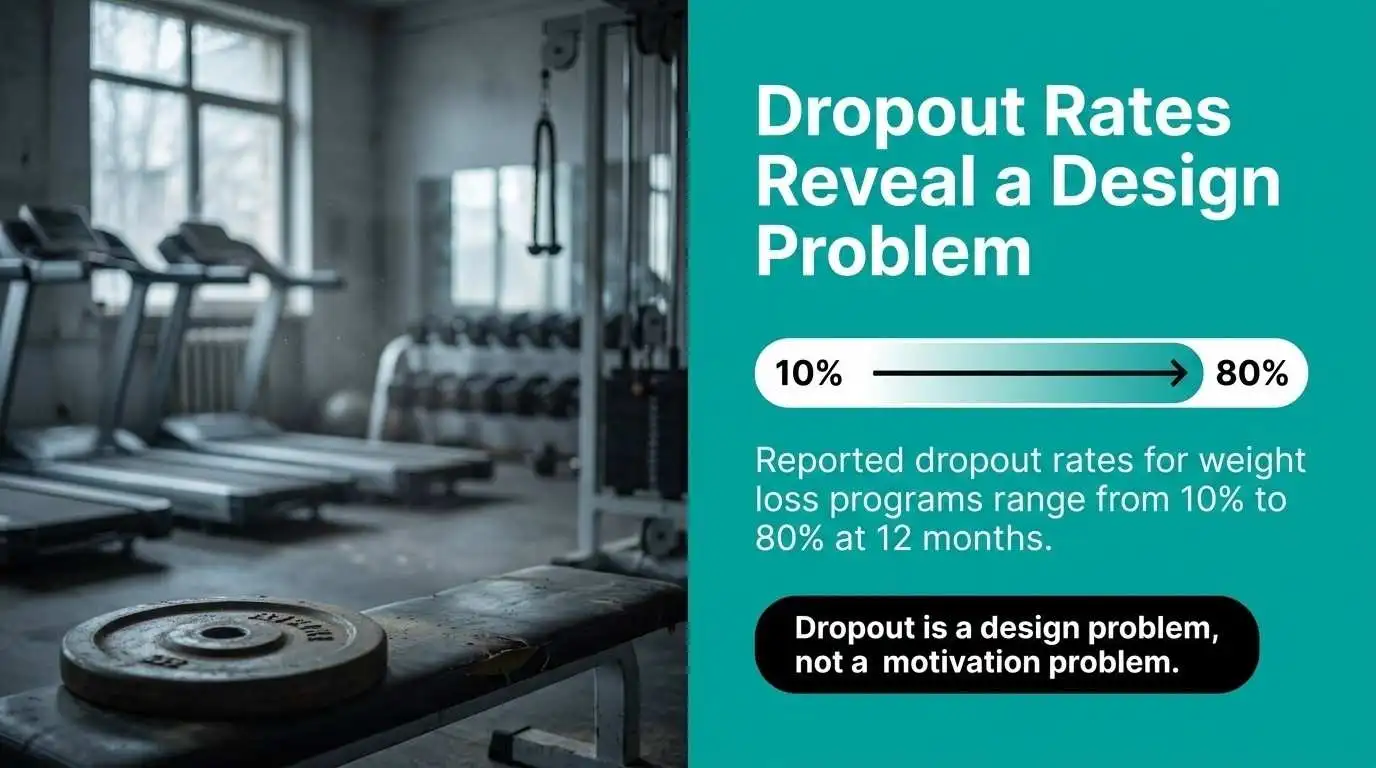
Published dropout data show that reported rates for weight-loss programs range from 10% to 80% at 12 months. That enormous variance is not random.
Programs with stronger behavior change components consistently outperform those that focus on exercise and nutrition in isolation. Dropout is a design problem, not a client motivation problem.
PT Distinction's automated messaging lets you schedule check-in messages at high-dropout moments, end of Week 2, before a weigh-in, after a missed session, without adding manual effort. Clients who feel supported stay in the program.
As a personal trainer, your role in nutrition is to educate and support, not prescribe medical diets. Nonetheless, offering nutrition coaching for weight-loss clients is crucial.
You can help clients understand how to create a sustainable energy deficit through food choices without obsessive calorie counting.
Practical strategies include prioritizing protein at every meal (to preserve lean body mass during a deficit), increasing the volume of vegetables to manage hunger, and reducing liquid calories.
These are not complicated. They are consistent. And consistency is what drives results.
Self-monitoring is one of the most effective behavioral strategies in weight management research. Clients who track food intake, body weight, and activity levels consistently lose more weight and maintain losses longer than those who do not.
This is not about creating anxiety. It is about creating awareness.
Start with one tracking behavior at a time. Ask clients to log their meals for one week without making any changes. Just observe. Then introduce changes based on the data.
This approach builds the habit before the challenge. Tracking activity alongside food intake closes the loop on the energy equation. Our article on weight and activity tracking walks through how to make this practical for your clients.
PT Distinction's Habits feature lets you assign specific daily behaviors, logging meals, hitting a step target, drinking water, directly inside your client's app, so tracking happens alongside their workouts without needing a separate tool.
Behavioral goal setting in this context means identifying the specific actions that produce the outcomes, not just the outcomes themselves. “Eat protein with breakfast five days this week” is an actionable behavioral goal. “Lose two pounds” is an outcome. Train clients to set both, and to celebrate the process goals even when the outcome is slow.

Several widespread myths about weight loss actively undermine client progress and erode trust in the training process, and a personal trainer who can address them directly builds credibility that keeps clients in the program longer.
Most of these myths are not entirely wrong. They are oversimplified. That is what makes them persistent.
Cardiorespiratory training burns more calories during the session. Resistance training builds lean body mass, which increases resting caloric expenditure over time. Both matter. Neither is the winner.
The research is clear: combined strength plus endurance training outperforms either approach alone for obesity management. A weight loss program that skips resistance training leaves the most powerful long-term metabolic tool on the table.
Extremely aggressive energy deficits of 1,000 kcal/day or more tend to trigger lean body mass loss, hormonal adaptation, and fatigue. Clients feel bad, train less hard, and often binge back to baseline.
The 500-750 kcal/day range exists for good reason. It is aggressive enough to drive consistent fat loss and moderate enough to preserve the muscle that keeps metabolism running.
They do not. Starting fitness level, age, sleep quality, stress load, and dietary history all affect how a client responds to the same program. This is why the assessment phase matters so much.
A program designed for a 28-year-old former athlete and a 50-year-old who has not trained in a decade looks substantially different, even if both clients have the same weight loss goal.
They do not, automatically. Behavior change must outlast the formal program. This is where the habits built during the program become more important than the exercise prescription itself.
A client who has internalized the self-monitoring habits, nutritional strategies, and movement behaviors is far more likely to maintain results than one who only follows a plan without understanding it.
Designing a weight-loss program for clients that actually works comes down to four things done consistently: a measurable energy deficit; phased resistance training that progresses through stabilization, strength endurance, and power; cardiorespiratory training structured around heart rate zones; and behavioral strategies that address the habits driving long-term results.
None of these is secret. But most programs miss one or two of them, and that is where results fall apart.
Start with the assessment. Build the phases. Track the data. And do not underestimate the behavior change piece. That is what separates a program that works for 12 weeks from one that changes how a client lives for years.
Ready to deliver weight loss programs your clients can actually follow? PT Distinction gives you everything you need to build, deliver, and track structured training programs online, from phased workout plans and nutrition habit tools to progress reporting and client communication. Start your free 1-Month trial and see why thousands of trainers worldwide trust PT Distinction to power their coaching.
Ready to join the family?
We'll get you up and running in no time. Start with our zero-risk free trial and build your personal training empire today.