January brings a flood of motivated clients to your inbox. But will you be ready to convert them?
The fitness industry has shifted. AI tools handle programming. Wearables track workouts. Clients expect personalized experiences instantly.
Most personal trainers enter 2026 with vague goals: "Get more clients." "Make more money."
These resolutions fail by February because they lack structure and measurable outcomes.
This year, we're focusing on ten specific resolutions that address the real challenges trainers face.
Each resolution targets retention, technology adoption, or revenue stability.
Because nearly 50% of new gym members cancel within six months, keeping clients matters more than finding new ones.
These aren't motivational platitudes. They're actionable strategies backed by industry data and designed for immediate implementation.
You'll learn how to leverage emerging technologies, build sustainable revenue streams, and create experiences that keep clients engaged beyond the typical drop-off point.
New Year's resolutions collapse under their own weight. Trainers set goals like "double my client base" without considering capacity, systems, or realistic timelines.
The pattern repeats yearly. January optimism fades into February reality checks. Trainers recognize their goal requires infrastructure they lack or skills they haven't developed.
Most business goals fail because they're outcome-focused without process mapping.
You want more revenue but haven't identified which services to package or how to price them. You want better retention, but don't track the metrics that predict churn.
Successful resolutions require three elements: specificity, measurability, and realistic timelines. Vague aspirations become concrete plans when you attach numbers and deadlines.
The fitness industry's shift toward subscription models makes this planning crucial. Recurring revenue models provide stable income, but only if you structure offerings correctly and deliver consistent value.
71% of customers expect personalization in their fitness experience. Generic programs no longer satisfy client expectations in 2026.
Start by integrating AI personal trainer tools into your programming process. These platforms analyze client data, workout history, and recovery patterns to suggest program modifications in real time.
Choose one AI tool this month to jump on the most recent fitness trends and expectations. AI will become integral to fitness programming, member communication, scheduling, and personalization, helping you reduce administrative time while improving client outcomes.
That’s why we integrated AI into many PT Distinction features well before it became a trend in the fitness app scene.
Focus on three personalization areas: workout progression, nutrition recommendations, and communication timing. AI can predict when clients need encouragement or when they're ready to increase intensity.
Track client engagement metrics before and after AI implementation. Measure session completion rates, response times to check-ins, and client satisfaction scores. This data proves ROI and guides further technology adoption.
In-person sessions alone limit your income potential. Hybrid coaching models that combine in-person and virtual training offer clients flexibility and revenue stability for you.
One way to do that is to design three service tiers: fully virtual, hybrid, and exclusively in-person. Price them to reflect value and your time investment. Virtual options reduce your overhead while serving clients who travel or have unpredictable schedules.
Start with your current clients. Offer one virtual check-in per month as an add-on. Test the technology, refine your process, and gather feedback before expanding.
Create content libraries for your virtual clients. Record exercise demonstrations, mobility routines, and educational videos. This content serves multiple clients simultaneously, improving your time efficiency.
Set boundaries around virtual availability. Schedule specific hours for video check-ins and limit text communication to designated windows. Hybrid models only work when you protect your time as carefully as you do in in-person sessions.
Client retention delivers better ROI than acquisition. A client who stays for twelve months generates more revenue and referrals than three clients who quit after one month.
Track three retention metrics starting this month: average client tenure, monthly churn rate, and reactivation success rate. These numbers reveal patterns in your service delivery.
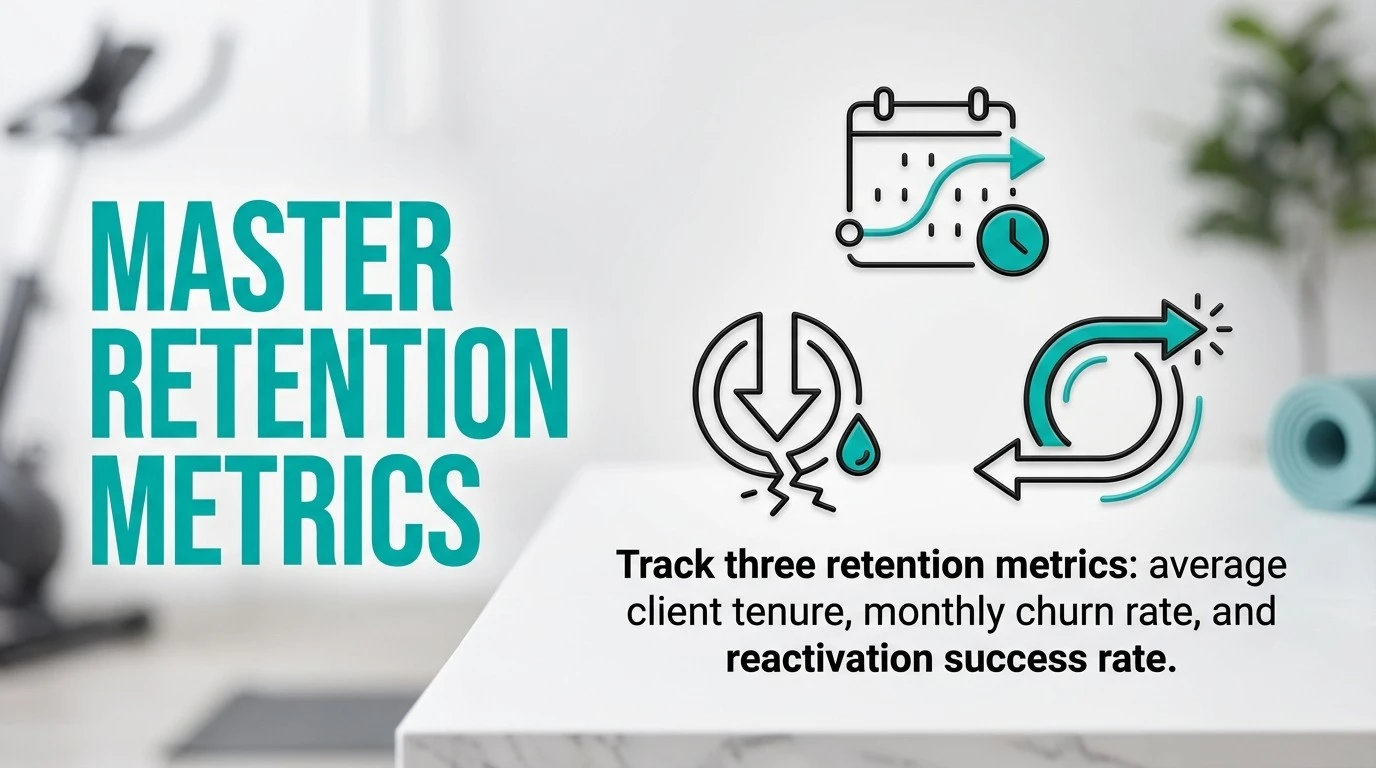
Review client tenure quarterly. Identify the point where most clients cancel. That's your intervention moment. Implement a touchpoint strategy two weeks before typical drop-off dates.
Calculate your monthly churn rate: divide the number of clients lost by the number of total clients. Industry averages hover around 5-10% monthly.
If yours exceeds this, examine your onboarding, communication frequency, and program difficulty.
Build a reactivation campaign for past clients. Monthly emails showcasing new services or limited-time offers bring former clients back. These warm leads convert faster than cold outreach because trust already exists.
Fitness tracker data integration will shift from tracking to real-time programming based on client physiology this year.
Learn to interpret heart rate variability, sleep quality scores, and recovery metrics from popular wearables. This data informs daily training decisions and demonstrates your expertise.
Request wearable access from interested clients. Start with three clients as a pilot program. Review their data weekly and adjust programming based on recovery indicators.
Create decision trees for common scenarios. If HRV drops below baseline, reduce training intensity. If sleep quality falls for three consecutive nights, prioritize recovery work over strength training.
Document results from data-driven adjustments. Track performance improvements, injury prevention, and client satisfaction. This evidence supports premium pricing for data-integration services.
Marketing without measurable goals wastes time and budget. SMART goals (Specific, Measurable, Attainable, Realistic, Time-bound) transform marketing from random posting to strategic growth.
Set one SMART marketing goal per quarter. Example: "Generate 15 qualified leads from Instagram by March 31 using educational reels posted three times weekly."
Break annual revenue targets into quarterly milestones. If you want ten new clients this year, you need 2-3 per quarter. This pacing prevents year-end scrambling.
Identify which marketing channels generate actual clients versus vanity metrics. Track lead source for every new client. Invest more time in channels that convert, reduce effort on platforms that don't.
Review effective marketing goal-setting strategies to structure your campaigns around measurable outcomes rather than activity metrics.
Small-group training increases revenue per hour while building community. Groups of 3-5 clients generate more income than individual sessions while maintaining the same level of attention.
Start with one group to trial your system. Focus on a specific niche: new moms, runners, or desk workers. Specialized groups attract committed clients who value peer support.
Price groups at 60-70% of individual session rates per person. Three clients in a 60-minute session at $40 each generate $120, compared with $80 for one private client.
Design group programs that balance individual attention with collective energy. Use circuit formats, partner exercises, and team challenges that foster connection while allowing personalized modifications.
Social connection sustains long-term participation. Clients stay for the community even when motivation wanes. Groups reduce the isolation of solo training and increase accountability.
Customer recommendations from friends and family provide higher-quality leads than advertising. Satisfied clients become your most effective marketing channel when you create referral systems.
Implement a formal referral program this quarter. Offer one free session for every successful referral who commits to a package. This incentive motivates clients without devaluing your services.
Ask for referrals at specific milestones. When clients achieve goals, celebrate their success, and request introductions to friends with similar goals. Timing matters. Enthusiastic clients refer enthusiastically.
Make referring easy. Provide shareable content, referral cards, or simple email templates clients can send. Friction kills referrals. Simplicity encourages them.
Track referral sources and conversion rates. Some clients generate multiple referrals, while others never refer. Identify your referral champions and nurture those relationships specifically.
Explore proven networking strategies that complement your referral system and expand your professional connections.
Client goal-setting determines retention and satisfaction. Vague goals lead to unclear progress and eventual cancellation. Structured goal-setting creates measurable milestones that clients can celebrate.
Use the SMART framework for every client goal. Transform "I want to get stronger" into "Increase deadlift by X% within 12 weeks through twice-weekly strength sessions."
Conduct quarterly goal reviews. Assess progress, adjust timelines, and set new targets. This process demonstrates value and maintains forward momentum.
Break annual goals into monthly milestones. Large goals overwhelm clients. Small, achievable steps build confidence and create frequent success moments.
Learn how to guide clients through effective goal-setting that balances ambition with realistic timelines.
Seasonal fluctuations affect every trainer's business. January brings new clients. Summer sees cancellations. December slows to a crawl.
Plan your promotional calendar around predictable patterns. Launch targeted holiday campaigns that address seasonal challenges like maintaining fitness during travel or managing stress eating.
Create off-season offerings that reduce barriers. Shorter commitments, lower-priced packages, or maintenance programs keep clients engaged when motivation drops.
Build financial reserves during peak months. Set aside 20% of January-March revenue to cover slower summer and December periods. This buffer prevents panic-driven pricing or marketing decisions.
Use slow periods for professional development. Complete certifications, update your website, or refine your systems when client demands decrease.
Training certifications don't teach business management. Most trainers excel at programming but struggle with pricing, marketing, and client management.
Dedicate at least one hour weekly to business education. Read industry publications, take marketing courses, or join trainer business communities. This investment compounds over the years.
Focus on one business skill per quarter. Q1: Pricing strategy. Q2: Email marketing. Q3: Social media content. Q4: Financial planning. Depth beats breadth in skill development.
Implement immediately after learning. Knowledge without application wastes time. Test new strategies with small experiments before full rollout.
Study comprehensive marketing approaches that integrate multiple channels into cohesive client acquisition systems.
No, $300 per month falls within the typical range of $200-$600 for packages with 2-4 sessions. This rate aligns with clients who commit to training several times per week and is more affordable than hourly rates of $40-$100 per session in urban areas.
Annual costs range from $2,400 to $7,200 for monthly packages priced at $200- $600, assuming consistent training. This equates to 24-48 sessions per year, based on a standard 2-4 sessions per month, with urban areas pushing expenses toward the higher end.
These ten resolutions address the real challenges facing personal trainers in 2026. Technology adoption, retention focus, and business systems separate thriving trainers from struggling ones.
Start with one resolution this week. Choose the goal that addresses your biggest current challenge. Master it before adding another.
Track your progress monthly. Review metrics, adjust strategies, and celebrate small wins. Consistent measurement prevents resolution abandonment.
Join communities of trainers pursuing similar goals. Accountability and shared learning accelerate implementation. Other trainers face identical challenges and solutions.
Understanding retention strategies will help you maintain the clients. These resolutions help you attract and serve better.
PT Distinction helps you turn smarter goals into day-to-day actions, from client tracking and personalization to retention and scalable services.
Start your free trial today and make 2026 the year your business finally runs with clarity and consistency.
Ready to join the family?
We'll get you up and running in no time. Start with our zero-risk free trial and build your personal training empire today.