


Starting out as a personal trainer is exciting. You've got the certifications, the passion, and the drive to help clients transform their lives.
But having technical knowledge doesn't automatically translate into successful client outcomes or a thriving business.
Most new trainers stumble over the same preventable mistakes. They focus intensely on exercise science while overlooking client psychology.
They perfect their squat cues but forget to track progress. They know anatomy but struggle to price their services correctly.
These gaps don't mean you're failing. They mean you're learning.
This guide covers seven critical mistakes that trip up new personal trainers. You'll learn why each mistake happens, how it impacts your clients and business, and specific steps to avoid these pitfalls from day one.
Walking into a gym and immediately loading weights onto a barbell feels productive. It looks like training.
But starting without a proper assessment is like building a house without checking the foundation.
New trainers often skip assessments because they feel pressure to show immediate value. Clients want to "feel the burn" in their first session. Assessments seem boring by comparison.
There's also a knowledge gap. Your certification covered fitness assessments, but applying them with real clients feels different. You might worry about looking inexperienced if you take too much time on paperwork.
Without baseline measurements, you can't demonstrate progress. When a client asks, "Am I getting stronger?" three months in, you'll have no data to show them.
More critically, you're risking client safety. Medical history screening reveals contraindications you need to know. Does your client have high blood pressure? Previous shoulder injuries? Exercise-induced asthma?
Jumping into overly challenging programs ranks as a top mistake beginner trainers make, causing injuries and exhaustion, according to fitness coaches.
Create a standardized intake process for every new client. This should happen before their first workout, not during it.
Your assessment should include:
Set expectations upfront. Tell clients during your consultation call that their first session includes assessment and goal-setting. Frame it as the foundation for their personalized program.
Document everything in a centralized system. Paper forms get lost. Digital records let you track progress over months and years.
For guidance on helping clients articulate clear fitness objectives, check out our article on setting effective fitness goals.
Adding plates to the bar feels like progress. Clients equate heavy weights with effective training.
But chasing numbers before mastering movement patterns sets up your clients for injury and you for liability.
Social media glorifies heavy lifts. Your clients see influencers squatting massive weights and want the same experience.
As a new trainer, you might feel pressure to deliver that intensity. Light weights with perfect form seem less impressive than heavy weights with compromised technique.
There's also an overconfidence trap. You learned proper form in your certification. You assume you'll catch technical breakdowns in real time. But watching a client perform a complex movement while cueing corrections, ensuring safety, and maintaining conversation is harder than it looks.
Lifting too heavy risks muscle tears, joint pain, or tendinopathy. These injuries don't just hurt your client. They damage your reputation and potentially expose you to legal risk.

Poor form also limits long-term progress. A client who half-squats 200 pounds isn't actually stronger than one who performs full-depth squats with 135 pounds. The movement quality matters more than the number.
Establish a movement progression system for every exercise you teach. No client skips levels, regardless of their confidence or previous experience.
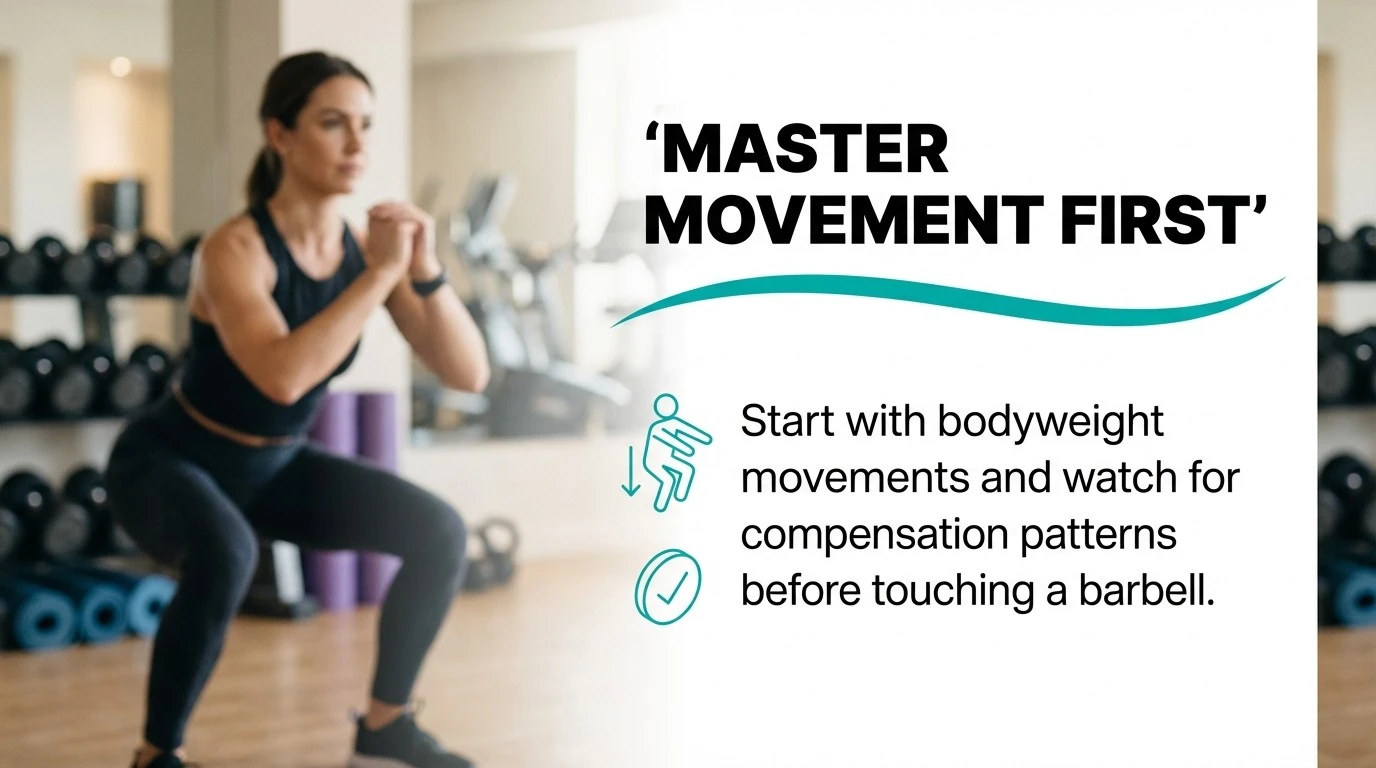
Start with bodyweight movements. Have your client perform goblet squats, push-ups, and rows before touching a barbell. Watch for compensation patterns like knee valgus, shoulder elevation, or spinal flexion.
Use the "leave reps in reserve" principle. Instruct clients to stop one to two reps before failure. This creates a safety buffer and allows them to maintain proper form throughout every set.
Record your clients (with permission). Video analysis reveals technical issues that aren't visible in real time. Review footage together and identify specific cues that help.
Build a technical checklist for common exercises. Before adding weight, your client should demonstrate consistent competency across multiple sessions. Make this standard practice, not an exception.
Our guide to fundamental training rules provides a framework for establishing these standards with every client.
You became a personal trainer to change lives through fitness. Nobody dreams of managing spreadsheets and posting on social media.
But being great at writing programs doesn't automatically fill your schedule with paying clients.
Fitness certifications focus on exercise science, anatomy, and program design. They dedicate minimal time to client acquisition, pricing strategy, or financial management.
Many new trainers assume clients will naturally appear once they're certified. Or they rely on their gym to provide clients without understanding how facility-based training limits their income.
There's also discomfort around marketing. Promoting yourself feels awkward or salesy. You'd rather let your results speak for themselves.
Without clients, you don't have a training business. You have an expensive hobby.
Poor pricing leaves money on the table or scares potential clients away. Ineffective marketing means the right clients never discover you. Weak sales skills result in consultations that don't convert.
Financial mismanagement creates stress even when you're fully booked. You might train 30 sessions per week, but still struggle to pay bills because you didn't account for taxes, insurance, continuing education, and equipment costs.
Treat business development as seriously as you treat continuing education in exercise science. Dedicate specific hours each week to business activities.
Start with market research. Who is your ideal client? What problems do they need solved? What can they afford to invest? Don't try to serve everyone. Specialization makes marketing easier and allows you to charge premium rates.
Develop a clear pricing structure based on your market, overhead costs, and income goals.
Calculate your necessary hourly rate by working backward from your annual income target. Account for the unpaid time spent on programming, marketing, and administrative tasks.
Create simple marketing systems. Build an email list. Post consistently on one or two social media platforms where your ideal clients spend time.
Share valuable content that demonstrates your expertise without giving away your entire program.
For detailed strategies on attracting your first clients, read our article on finding clients as a personal trainer.
Track your finances rigorously. Use accounting software or hire a bookkeeper. Know your actual profit margin, not just your gross revenue.
Template programs are efficient. You can recycle the same 12-week strength routine for multiple clients.
But clients don't pay for efficiency. They pay for customization that addresses their specific needs, limitations, and goals.
Creating individualized programs takes time. As a new trainer juggling multiple clients, templates feel necessary to stay organized.
There's also uncertainty. You might lack confidence in your programming abilities. Using a proven template feels safer than designing something custom that might not work.
Additionally, some trainers genuinely don't understand the need for customization. They learned a "good program" in their certification and assume it works for everyone.
Every client brings different capabilities, limitations, and objectives. A 55-year-old executive recovering from back surgery needs different programming than a 25-year-old athlete training for a marathon.
Generic programs ignore these differences. They don't account for previous injuries, equipment access, time constraints, or exercise preferences. The result? Poor adherence and mediocre outcomes.
Clients can also tell when they're getting the same program as everyone else. It undermines the personalized service they're paying for.
Start every program with the assessment data you collected. Reference their medical history, movement screening results, and specific goals.
Design around their constraints. If your client only has three 45-minute sessions per week, don't create a five-day program. If they have shoulder impingement, select exercises that work around it rather than aggravating it.
Build exercise progression and regression options into every workout program. Your client might perform a goblet squat perfectly in week one, then report knee pain in week three. Have alternative movements ready.
Periodize intelligently. Structure training phases that progress logically toward their goals.
A client training for general fitness needs a different periodization than someone preparing for a specific event.
Review and adjust programs regularly. Schedule formal program evaluations every 4-6 weeks. What's working? What needs modification? Are they progressing toward their stated goals?
Use software that makes customization efficient. Manual program design gets overwhelming as your client base grows.
The right tools let you personalize programs without spending hours on each one.
Your client shows up consistently. They work hard. You both feel like the training is effective.
But feelings aren't data. Without objective measurements, you can't prove progress or identify when your programming needs adjustment.
Tracking progress and goals takes time and organization. Between sessions, it's easy to forget to log weights, reps, or client feedback.
Some new trainers also don't fully appreciate the importance of tracking. They rely on subjective observations: "My client seems stronger" or "She says her pants fit better."
Without a structured plan and consistent logging, progress becomes unclear and motivation drops.
Without documentation, you can't demonstrate value. When clients question whether training is working, you have no concrete evidence to show them.
You also miss critical patterns. Is your client plateauing? Regressing? Compensating in ways that might lead to injury? Proper tracking reveals these issues early.
From a business perspective, documented results are your most powerful marketing tool. Before-and-after transformations with real data attract new clients. Generic testimonials don't carry the same weight.
Establish baseline measurements during your initial assessment. These become your comparison points for future evaluations.
Track multiple data types:
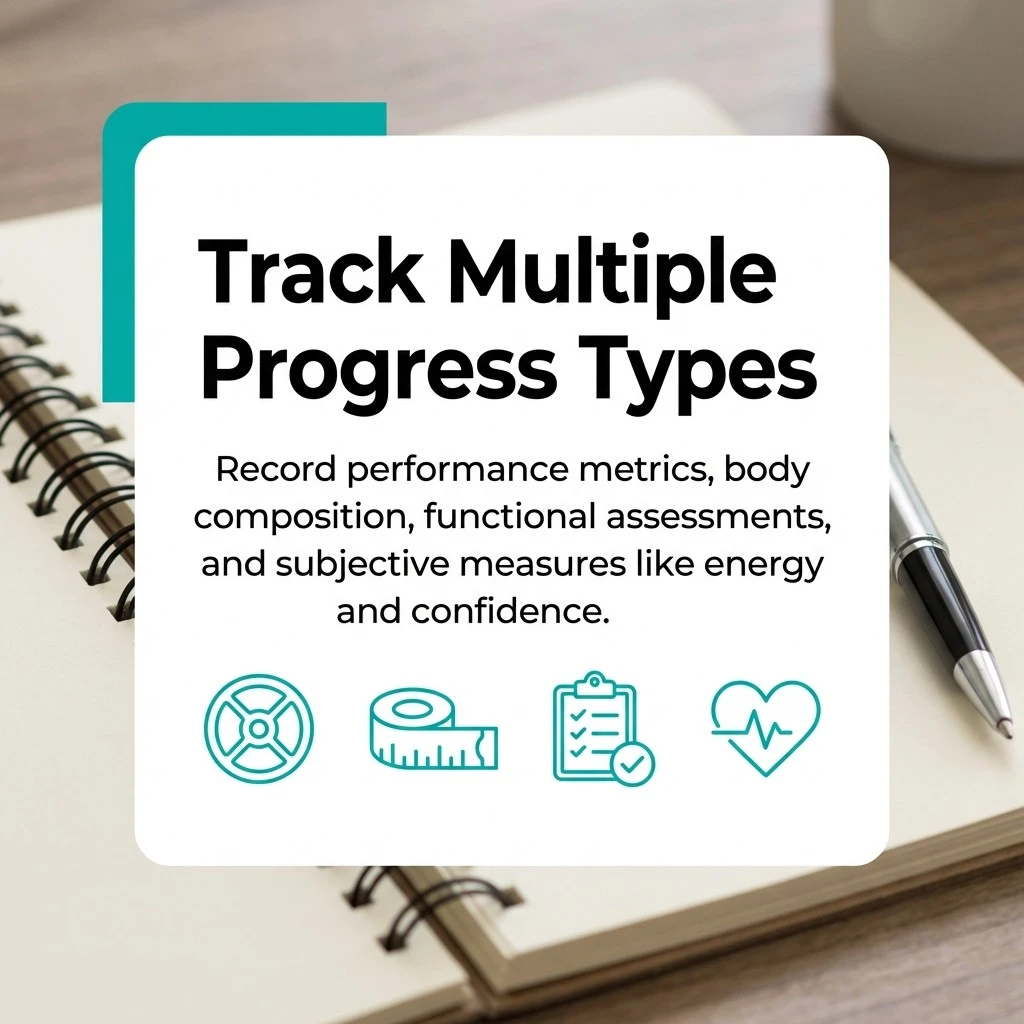
Record data immediately after each session. Don't rely on memory. Use a system that's accessible during training, whether that's a mobile app or a simple notebook.
Schedule formal reassessments every 4-6 weeks. Repeat your baseline tests and compare results. Discuss findings with your client and adjust programming based on what the data reveals.
Share progress visually. Graphs and charts make improvements obvious. A client who sees their deadlift increase from 95 pounds to 185 pounds over six months has tangible proof of your effectiveness.
Learn more about maintaining long-term client relationships through consistent results in our guide on client retention strategies.
You know exactly what your client needs to do. Eat more protein. Get adequate sleep. Show up consistently.
But knowing what to do and actually doing it are completely different challenges. Your job isn't just prescribing solutions. It's motivating behavior change.
Technical knowledge feels more important. You spent months learning biomechanics and program design. Communication seems like a soft skill by comparison.
Many new trainers also assume they're already good communicators. After all, they talk to clients every day. But effective coaching communication goes far deeper than casual conversation.
Clients who don't feel heard will leave. They might never complain. They'll just stop booking sessions.
Ineffective motivation leads to poor adherence. Your perfectly designed program doesn't matter if your client only shows up half the time.
Misunderstandings create frustration on both sides. You think you explained the exercise clearly. Your client performs it incorrectly and gets injured. Both parties feel let down.
Practice active listening. When clients talk about obstacles, resist the urge to immediately offer solutions. Ask clarifying questions. Reflect back what you hear. Make them feel genuinely understood.
Adapt your communication style to each client. Some people want detailed scientific explanations. Others prefer simple, direct cues. Pay attention to how individuals respond and adjust accordingly.
Master multiple motivational approaches. External motivation (like training for an event) works for some clients.
Others respond better to internal motivation focused on how exercise makes them feel. Identify what drives each person.
Provide specific, actionable feedback. Instead of "Good job," say "Your depth on that squat was perfect. You maintained a neutral spine throughout the entire set."
Check for understanding. After explaining a concept or exercise, ask clients to describe it back to you in their own words. This reveals gaps before they cause problems.
Celebrate small wins consistently. Progress isn't linear. When clients feel discouraged, remind them how far they've come since day one.
Our article on communication strategies for personal trainers provides deeper techniques for building strong client relationships.
Setting your rates or creating personal training packages feels like guesswork. Charge too much, and you won't get clients.
Charge too little, and you can't pay your bills.
Most new trainers make pricing decisions based on fear rather than strategy.
Without business experience, new trainers lack reference points. You might charge what other trainers at your gym charge, or base rates on what you personally could afford to pay.
Imposter syndrome plays a role, too. You're new. How can you justify charging premium rates when established trainers charge less?
There's also confusion about value. You price based on your time rather than the transformation you provide.
Underpricing creates multiple problems. You work more hours for less income. You attract clients who don't value your service and who frequently cancel. You can't afford continuing education or quality equipment.
Underpricing also positions you as less credible. Clients associate low prices with low quality. They assume expensive trainers are better, even when that's not true.
Overpricing for your market and experience level leaves you with an empty schedule. You can't develop your skills or build a reputation if you have no clients to train.
Calculate your necessary income. Work backward from your annual salary goal. Account for taxes (typically 25-30% for self-employed trainers), insurance, continuing education, equipment, and other business expenses.
Determine how many billable hours you can realistically work per week. Don't forget to account for programming time, administrative work, marketing, and unpaid consultations. If you train 25 hours per week, you might only bill 20.
Research your local market. What do established trainers charge? What's the average household income in your area? What do comparable services cost?
Create tiered pricing options. Offer different packages at different price points. This lets clients self-select based on their budget and commitment level.
Consider your positioning. Are you the budget option? The premium specialist? The best value? Your pricing should align with your market position.
Start with introductory rates if needed, but build in scheduled rate increases. Tell new clients: "My current rate is X as I build my practice. In six months, my rate will be Y." This creates urgency and sets expectations.
Value-based pricing beats hourly pricing. Instead of charging for your time, charge for outcomes. A specialized program that solves a specific problem can command higher rates than generic training.
Common Pricing Mistakes Personal Trainers Make, And Better Approaches
These seven mistakes aren’t signs that you’re cut out for failure, they’re signs that you’re early in the learning curve.
They don’t define your potential as a trainer; they simply highlight where better systems make everything easier.
When you assess properly, prioritise movement quality, track progress, communicate clearly, and price with intention, coaching becomes more effective and far less stressful.
Clients stay longer, results are easier to demonstrate, and your business starts to feel sustainable rather than chaotic.
PT Distinction is built to support exactly this stage of your journey. From client assessments and personalised programming to progress tracking and ongoing communication, the platform helps you put strong foundations in place without adding more admin to your week.
If you’re ready to coach with clarity, confidence, and structure, start your free trial today and see how the right systems can help you grow faster, and with fewer mistakes along the way.
Ready to join the family?
We'll get you up and running in no time. Start with our zero-risk free trial and build your personal training empire today.