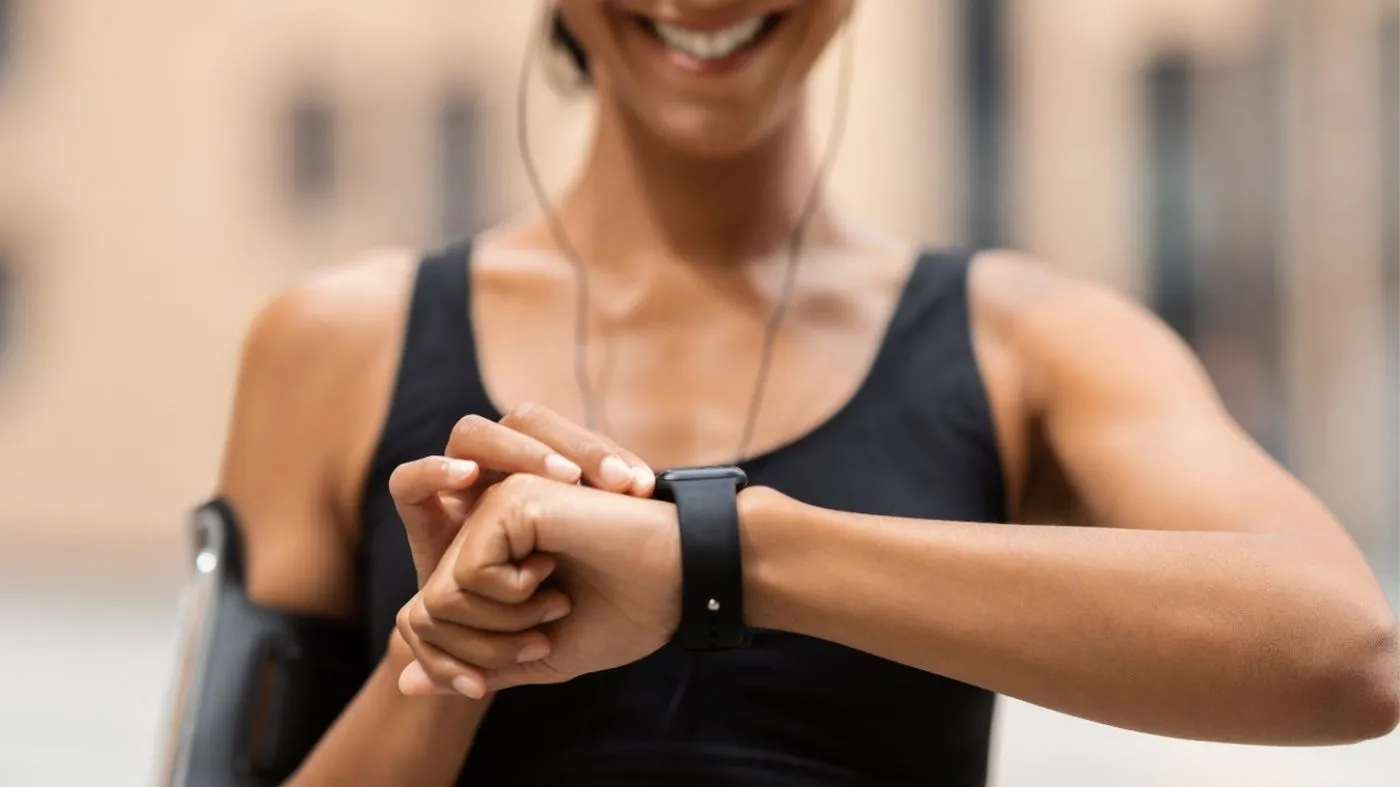


The five wearable devices worth knowing about in 2026 for personal trainers and their clients are the Apple Watch Series 11, Fitbit Charge 6, Garmin Cirqa Smart Band, WHOOP 5.0, and the Oura Ring 5.
Each tracks heart rate continuously, logs step count and daily activity, and feeds data into a companion app your clients can share with you.
The differences come down to price, battery life, GPS capability, sleep tracking depth, and whether the device doubles as a smartwatch. For trainers recommending wearables to clients, those distinctions matter more than the spec sheet ever suggests.
Wearable technology just ranked as the number-one worldwide fitness trend for 2026, according to the American College of Sports Medicine. That's not a coincidence. A significant share of your clients already own a fitness tracker or activity tracker. The question isn't whether wearables matter.
It's which ones are worth recommending, which ones produce data you can actually use in a coaching context, and which ones are honest about their limitations.
A wearable device for fitness is a body-worn sensor that continuously collects biometric data, most commonly heart rate, step count, sleep stages, and movement, and syncs that data to a companion app for review and coaching.
The vast majority use photoplethysmography (PPG), which means an optical sensor on the back of the device shines light into the skin and reads changes in blood flow to estimate heart rate.
Accelerometers measure movement and translate it into step count and activity estimates. GPS, where built in, tracks outdoor routes directly. Where GPS is phone-connected rather than built in, the device borrows the phone's location data, which is fine for most clients but limits solo tracking on a run.
The wrist-wear segment holds the largest share of the wearable technology market, and for good reason. It's the most practical form factor for continuous wear.
Smart rings like the Oura are gaining ground fast, and earbuds with biometric sensors are an emerging format, but wristbands and smartwatches remain the default for most clients you'll work with.
As a trainer, what you care about isn't the hardware. It's whether the data your client sees motivates them to move more, sleep better, and keep showing up.
Establishing a baseline for each client is easier when the wearable gives you a consistent daily snapshot. The device becomes part of your assessment toolkit, not just a consumer gadget.
The five fitness trackers and smartwatches below cover every major use case: the iPhone-first client, the mid-range client, the client who wants recovery data without a subscription, the recovery-focused high performer, and the client who refuses to wear anything bulky on their wrist.
The Apple Watch Series 11 is the strongest wearable recommendation for iPhone users, combining continuous heart rate monitoring, built-in GPS, sleep tracking, and hypertension notifications in a single device.
The Series 11 launched in 2025 with hypertension notifications, a sleep score feature, and 5G connectivity, according to Apple's Series 11 announcement.
That hypertension alert alone makes it worth discussing with clients who have cardiovascular health concerns. Sleep score is straightforward for clients who want a single number rather than a breakdown of sleep stages.
And the Apple Health ecosystem is genuinely good at pulling everything together. For trainers on PT Distinction, that data doesn't have to stay siloed in a client's phone: PTD's Apple Watch integration pulls client exercise, sleep, and heart rate data straight into your dashboard.
The battery life is the honest trade-off. Expect 18 to 24 hours of typical use, which means a nightly charge is non-negotiable. For clients who want to track sleep every night, that's a small but real friction point. The always-on display also drains the battery faster if clients leave it enabled.
Worth knowing: In a survey of personal trainers, Fitness Mentors found that 44.7% preferred the Apple Watch. That's a plurality. It also tells you something about the client conversations you're likely already having.
The Google Fitbit Charge 6 delivers built-in GPS, continuous heart rate monitoring, and Google Health app integration at a mid-range price point that most clients can justify without a second thought.
The Fitbit app and Google Health ecosystem are genuinely underrated. Data syncs cleanly, the Charge 6 connects directly to gym equipment via Bluetooth, and the Daily Readiness Score gives clients a simple answer to the question, "Should I push hard today or take it easy?"
Battery life sits at around five to seven days with typical use, which is a meaningful difference compared to the Apple Watch for clients who dislike daily charging.
The Charge 6 also supports ECG (electrocardiogram) readings and SpO2 (blood oxygen) monitoring. Those aren't features most clients will use daily, but they're useful for trainers working with clients managing cardiovascular health.
The heart rate monitor tracks heart rate all day and during workouts. GPS is built in, so outdoor runs and rides map accurately without needing a phone.
The Garmin Cirqa Smart Band is Garmin's answer to WHOOP: a screenless, subscription-free tracker built around continuous heart rate, HRV, sleep, and recovery data, sold for a one-time $199.99 price rather than a monthly membership fee.
This is the device to recommend to clients who like the idea of a screenless WHOOP-style recovery tracking but don't want an ongoing bill. Core metrics, including heart rate, HRV, sleep staging, Pulse Ox, and stress, live in the free Garmin Connect app at no extra cost, following Garmin's decision to drop an earlier plan to paywall real-time heart rate.
An optional Garmin Connect+ subscription unlocks deeper coaching features, but nothing essential sits behind it. Garmin's broader lineup, from the Forerunner to the Fenix, also dominates sport-specific performance watches, so for a client who wants a serious training watch and a discreet recovery band, Garmin is one of the few brands that can supply both within a single ecosystem.
The lack of a built-in GPS is the main limitation, and there's no display, so clients who want to glance at live stats mid-workout won't get that here.
The Cirqa uses connected GPS, borrowing the phone's location data when an activity is started from the Garmin Connect app. Battery life is rated at 10 days, and 50-meter water resistance covers pool swimming and everyday showering, though it's not built for open water or diving.
The WHOOP 5.0 is a screenless wearable device designed to monitor recovery, sleep quality, heart rate variability (HRV), and training load, with an AI Coach feature that provides personalized daily guidance.
WHOOP 5.0 features an upgraded Strength Trainer function that tracks muscular load alongside cardiovascular effort, according to Athletech News. That's a valuable capability for trainers working with clients who do both strength and cardio.
The device gives clients a daily Recovery score, a Strain score, and a Sleep score. Three numbers. Clients can actually do something with three numbers.
The subscription model is what distinguishes it from other brands. WHOOP offers three membership tiers, ranging from around $17 to $30 per month depending on the term and hardware, and the device itself is included in the membership.
There's no one-time purchase option, which is the main thing that sets it apart from the Garmin Cirqa above. For the right client, that's a non-issue. For budget-conscious clients, it can be a dealbreaker.
Battery life is a genuine strength at 14-plus days, and the device charges on the wrist via a slide-on battery pack, which means clients never have to take it off.
The Oura Ring 5 is priced at $399 and delivers advanced sleep staging, heart rate variability tracking, and readiness scoring in a ring form factor that clients can wear 24 hours a day without discomfort or social awkwardness.
The ring form factor matters more than it sounds. Clients who hate wearing a wristband to sleep, at formal events, or during certain sports often stick with the Oura Ring, even when they'd abandon a fitness tracker.
Continuous wear produces better data, full stop. A 2024 independent study found the Oura Ring demonstrated 76 to 80% sensitivity for sleep staging, according to a Forbes analysis of fitness tracker accuracy. That's meaningful for trainers advising clients on sleep as a recovery tool.
Battery life runs seven days. The Oura Ring 5 features a slimmer, more durable design compared to previous generations. The companion app provides a Readiness score, Sleep score, and Activity score daily. Like WHOOP, there's a monthly subscription fee (approximately $6 per month) after the first month.
The most important features in a fitness wearable device depend on the client, and getting that match right determines whether the device ends up used or unused in a drawer after six weeks.
Most trainers get asked for a recommendation without enough context. The right question to ask before recommending any wearable is: "What do you most want to change about how you track your fitness right now?" The answer tells you everything.
For the client whose sleep is wrecked, steer toward sleep-tracking depth: Oura or WHOOP. For the client training for a 10K, built-in GPS is non-negotiable. For the client with heart concerns, the Apple Watch Series 11's ECG and hypertension notifications are worth the battery compromise.
Continuous heart rate monitoring via an optical PPG sensor is standard across all five devices above, but accuracy varies with wrist placement, skin tone, and movement intensity.
All five devices use PPG sensors, which work by shining green (and sometimes infrared) light into the skin. During high-intensity intervals or strength training with heavy grip, optical heart rate monitors struggle. Wrist movement creates "noise" in the signal. This is a known limitation.
A chest strap remains more accurate for peak heart rate during intense effort. For steady-state cardio and resting heart rate, wrist-based devices perform well. Set client expectations accordingly, and the data stays useful.
Built-in GPS records outdoor route data independently of a smartphone, while phone-connected GPS requires a paired phone to map routes and calculate pace.
For clients who run, cycle, or hike without their phone, built-in GPS is essential. The Apple Watch Series 11 and Fitbit Charge 6 both have built-in GPS, as do Garmin's sport watches, such as the Forerunner and Fenix lines.
The Garmin Cirqa, WHOOP 5.0, and Oura Ring 5 do not; all three rely on connected GPS through a paired phone. That's not a flaw if the client doesn't do outdoor distance work, but it's the wrong call for anyone training for outdoor events who won't run with their phone.
Battery life in fitness wearables ranges from 18 hours (Apple Watch with always-on display) to 14-plus days (WHOOP 5.0), and the trade-off almost always involves screen quality and smartwatch features.
Full smartwatches with bright color displays drain batteries faster. Simpler fitness trackers with smaller screens or no screen last much longer. For clients who want to wear a device 24/7, including during sleep, longer battery life removes a real friction point.
Clients who forget to charge devices quickly stop wearing them. That's a coaching problem, not a technology problem. Activity tracking for clients only works when the wearable is actually worn.
Sleep tracking in modern fitness wearables uses accelerometers and heart rate data to estimate time spent in light, deep, and REM sleep stages, though accuracy varies across devices.
The Oura Ring 5 and WHOOP 5.0 produce the most detailed sleep data among the five devices listed here. Both track HRV alongside sleep stages, providing a more complete picture of overnight recovery than sleep-stage estimates alone.
The Fitbit line and Apple Watch provide sleep-stage tracking with varying levels of accuracy. For clients you're coaching around recovery and stress management, detailed sleep data is one of the highest-value outputs a wearable can provide.
A fitness tracker focuses on health and activity metrics such as step count, heart rate, sleep tracking, and workout logging, while a smartwatch adds notification management, apps, mobile payments, and, in some cases, cellular connectivity.
The Apple Watch Series 11 is a full smartwatch. The Fitbit Charge 6 sits in the middle, with some smartwatch capabilities like app access and contactless payments, but fewer third-party apps.
The Garmin Cirqa, WHOOP 5.0, and Oura Ring 5 are dedicated fitness trackers or health monitors with no smartwatch functionality. That distinction matters for clients who want to leave their phone at home on a run, take calls, or manage their calendar from their wrist.
For fitness tracking purposes, a dedicated activity tracker often does a better job than a smartwatch. Longer battery life. Lighter. Less distraction.
Clients who wear their fitness tracker purely to move more, sleep better, and hold themselves accountable rarely need apps on their wrist. Push back gently if a client defaults to "I'll just get the Apple Watch" when a Fitbit Charge 6 at under half the price would track their fitness just as well.
The practical question to ask is: does this client need a second phone on their wrist, or a health monitor? The answer shapes the recommendation every time. For more on how technology choices are reshaping personal training, this overview of technology in personal training covers the broader context well.
The five wearable devices in this guide were selected based on fitness-tracking accuracy, battery life, heart-rate monitoring quality, sleep-tracking capability, GPS functionality, companion app quality, and price-to-value ratio across different client use cases.
Each device was evaluated against criteria that matter to working trainers, not just tech reviewers. Companion app quality matters because it's what your client actually interacts with. A wearable with brilliant sensors and a terrible app produces frustrated clients.
The Fitbit app and Google Health integration is genuinely good. The WHOOP app is the most coaching-forward of the group, built around actionable daily scores. The Oura app is clean and honest about what it knows and what it's estimating.
We also weighted real-world wearability. A fitness tracker your client wears only during workouts captures a fraction of the data that a device worn all day produces. The devices here all pass the "would a non-tech client wear this daily" test, which eliminates a long tail of technically impressive wearables that nobody actually sticks with.
Independent accuracy research informed the sleep tracking assessments. The Forbes accuracy analysis, drawing on a 2024 independent study, gives the Oura Ring's sleep staging a 76-80% sensitivity rating. That's the kind of independent validation worth citing when clients ask how accurate their device actually is.
For activity and weight tracking, having reliable device data to pull from makes the whole process smoother.
The most useful metrics fitness wearables produce for personal training contexts are resting heart rate, heart rate variability (HRV), sleep stages, step count, active calories, and estimated VO2 max, each of which can directly inform training load decisions.
Most clients understand step count. Fewer understand why HRV matters. HRV is the variation in time between heartbeats, and it reflects how recovered the nervous system is. High HRV generally means the body is ready to handle stress.
Low HRV after poor sleep or hard training is an early signal to scale back. WHOOP 5.0 and Oura Ring 5 both make HRV central to their daily scores. Fitbit and Apple Watch report HRV but present it as background data rather than a primary coaching metric.
VO2 max estimation from wrist-based devices is less accurate than lab testing. All five devices above provide some form of VO2 max estimate, typically derived from heart rate response to exercise combined with GPS pace data where available.
Garmin devices have historically been strong at estimating VO2 max, particularly during outdoor runs with GPS. The Apple Watch provides a cardio fitness level rather than a specific VO2 max number, which is a defensible choice given the accuracy limitations of wrist-based estimation.
For trainers, the practical play is to use these metrics directionally, not diagnostically. A client whose resting heart rate drops by 8 beats per minute over three months of training has made a real cardiovascular improvement, whatever the device shows.
The trend matters more than the precision. That's how to frame wearable data with clients who ask whether their device is "accurate enough."
Wearables are also pushing into broader health monitoring. The WHO reports that nearly one-third of adults worldwide did not meet recommended physical activity levels in 2022.
A client seeing their own step count data daily is one of the most friction-free ways to close that gap. That is the real case for recommending wearables to every client, regardless of fitness level.
Wrist-based optical heart rate monitors, GPS tracking, sleep-staging algorithms, and calorie-burn estimates in fitness trackers all have known accuracy limitations that trainers need to communicate clearly to clients before clients rely on the data.
Optical heart rate monitoring is least accurate during high-intensity interval training and heavy strength work. Wrist movement creates signal interference. A client who thinks their heart rate monitor is tracking accurately during a heavy deadlift set is probably looking at a smoothed estimate rather than a live reading. For clients for whom heart rate zone training matters, consider pairing a wrist-based fitness tracker with a chest-strap heart rate monitor during key sessions.
Step count accuracy is better than people assume, but still imperfect. Any wrist movement can be counted as steps on some devices. Clients who drive frequently or work with their hands may see inflated step counts. The reverse is also true: pushing a stroller or walking with hands in pockets can lead to undercounting. Step count is most useful as a relative daily trend, not an absolute number to obsess over.
Calorie burn estimates are the least reliable output any fitness tracker produces. The algorithms combine step count, heart rate, body weight, and sometimes age and gender. Small errors in each input compound. The number your client sees as "calories burned" during a workout can be off by a significant margin in either direction. Communicate this proactively, especially to clients who use wearable data to manage nutrition alongside training.
Sleep staging via accelerometer and heart rate data captures broad patterns well enough to be useful, but misclassifies specific sleep stages with meaningful regularity. The 76-80% sensitivity figure for Oura Ring sleep staging is actually strong by wearable standards. But that means up to 24% of staging classifications could be inaccurate in a given night. Useful for trends. Not a clinical tool.
None of this means that wearable fitness devices aren't worth recommending. The clients who use them consistently move more, sleep more intentionally, and engage more actively with their own health data. That's the outcome that matters. Accuracy caveats are context, not a reason to steer clients away.
The best wearable device for any individual client comes down to four practical factors: their phone (iPhone or Android), their willingness to charge daily, whether they need GPS for outdoor training, and their budget.
iPhone users who want the most integrated experience: Apple Watch Series 11. Clients who want reliable GPS, ECG, and mid-range pricing: Fitbit Charge 6. Clients who want WHOOP-style recovery data without a subscription: Garmin Cirqa Smart Band.
Athletes focused on recovery, HRV, and training load who don't mind a membership: WHOOP 5.0. Clients who want the most discreet 24/7 tracking with strong sleep data: Oura Ring 5.
The wearable market is large and growing fast. Statista projects global fitness tracker market revenue at US$51.33 billion in 2026. Your clients are buying these devices with or without your input.
Being the trainer who gives them a clear, honest recommendation based on their specific situation is a small thing that builds a lot of trust.
The data from a wearable is most powerful when it connects back to a coaching relationship. Knowing that a client had four nights of poor sleep before their Monday session is a signal to adjust how you program that session.
Knowing their resting heart rate has trended up over two weeks might prompt a conversation about stress or overtraining.
Wearable data is only as useful as the coaching conversation it enables. If you want to build a coaching system that actually uses that data, scheduling client workouts is a natural next step once the tracking foundation is in place.
The fitness tracker your client wears is the one that fits their life. Your job is to help them pick that one and then make sense of what it tells them. If they land on an Apple Watch, PTD's app shows them Apple Watch workout tracking, so the data actually reaches you.
Wearable technology is no longer a nice-to-have in personal training. It's the data layer that connects what clients do between sessions to what happens when they're with you. The five devices covered here give you a solid foundation for making recommendations you can stand behind.
The Apple Watch Series 11 for iPhone users. Fitbit Charge 6 for mid-range pricing with GPS and ECG. Garmin Cirqa Smart Band for subscription-free recovery tracking. WHOOP 5.0 for recovery-focused athletes who don't mind a membership.
Oura Ring 5 for clients who want discreet, always-on tracking. Start by asking clients what they most want to change, then match the wearable to that answer.
Ready to connect the data your clients collect to a coaching system that actually does something with it? PT Distinction gives you everything you need to run your online and hybrid coaching business in one place, from program delivery and habit tracking to client communication and progress reporting.
Start your free 1-Month trial and see why thousands of trainers worldwide trust PT Distinction to power their coaching.
Ready to join the family?
We'll get you up and running in no time. Start with our zero-risk free trial and build your personal training empire today.