


Personal trainers face real competition today. You need a proven system to consistently attract clients. Facebook Ads delivers exactly that when you set it up correctly.
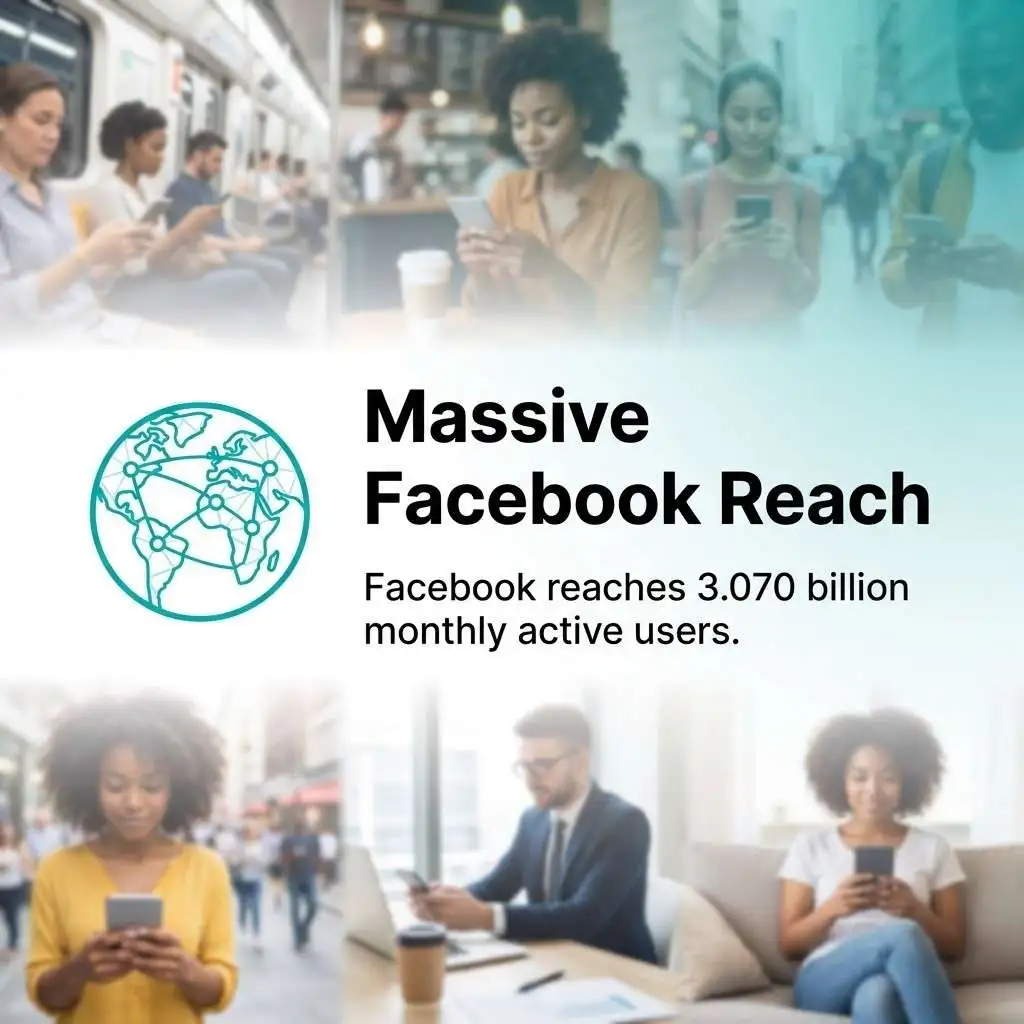
Facebook reaches 3.070 billion monthly active users. Your potential clients are already scrolling through their feeds daily. The platform lets you put your personal training services directly in front of people actively looking to get fit.
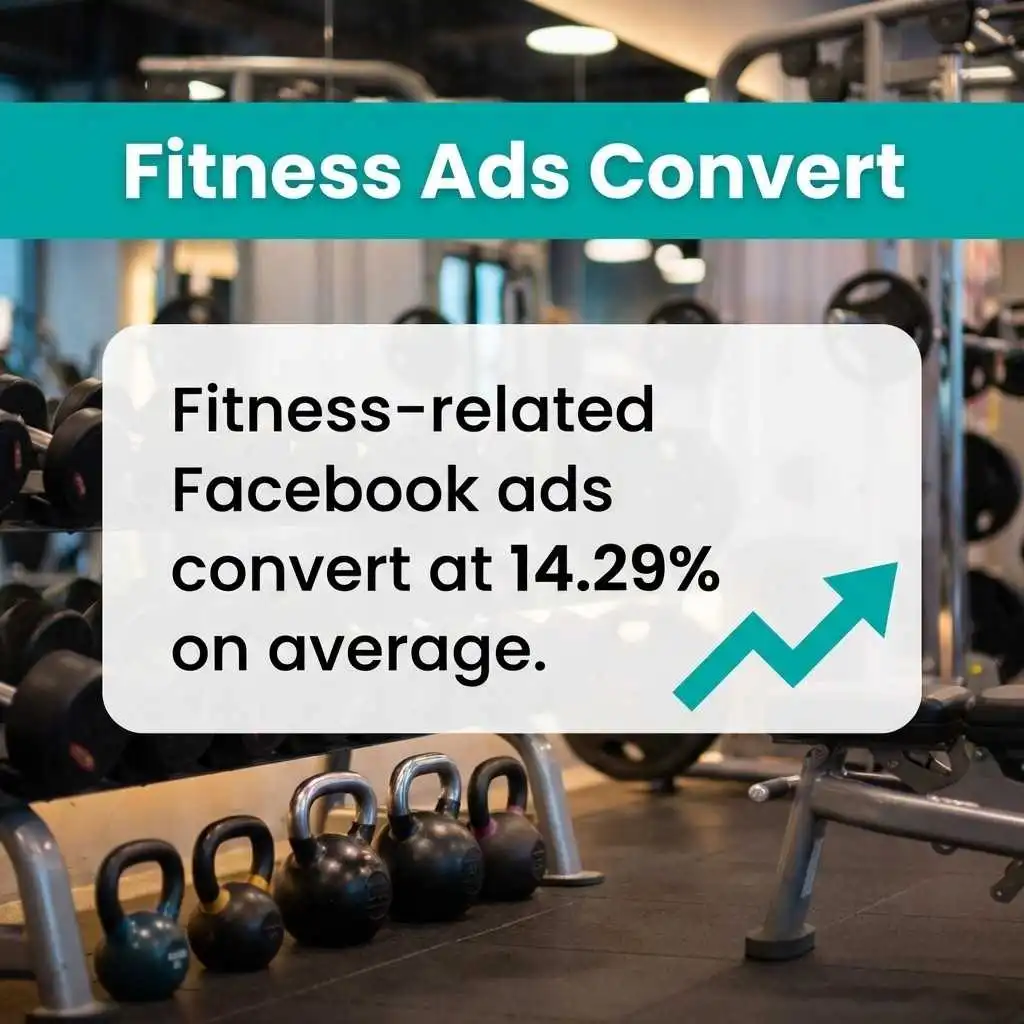
The numbers prove this works. Fitness-related Facebook ads convert at an average rate of 14.29%. That means roughly one in seven people who click your ad become qualified leads.
This guide walks you through the complete Facebook Ads setup process. You'll learn exactly how to create campaigns that attract personal training clients. We cover account setup, targeting strategies, budget recommendations, and the specific ad formats that work best for trainers.
You'll discover how to properly track leads and avoid common mistakes that waste advertising budgets. By the end, you'll have a clear roadmap to launch profitable Facebook ad campaigns for your personal training business.
Facebook Ads gives personal trainers something traditional marketing can't match: precise audience targeting. You can show your ads only to people who match your ideal client profile.
The platform lets you target by location, age, interests, and behaviors. Want to reach 35-45-year-old women within 10 miles of your gym who recently engaged with fitness content? You can do that.
The US personal training market is projected to reach $11.9 billion in 2026. Competition increases every year. Facebook Ads helps you stand out by putting your services directly in front of motivated prospects.

Traditional marketing methods like flyers and local ads reach everyone in an area. Facebook Ads reach only the people most likely to hire a personal trainer. This targeting precision significantly reduces wasted spending.
The lead generation process works efficiently, too. People click your ad, fill out a short form, and you get their contact information immediately. No waiting for phone calls or email responses.
You maintain complete control over your budget. Start with small daily spending to test what works. Scale up successful campaigns quickly once you identify winning ad combinations.
Facebook owns Instagram, so your ads can appear on both platforms simultaneously. This expanded reach helps you connect with different audience segments through a single campaign setup.
Budget planning starts with understanding what you'll actually pay. Facebook Ads costs vary based on your targeting, competition, and ad quality.
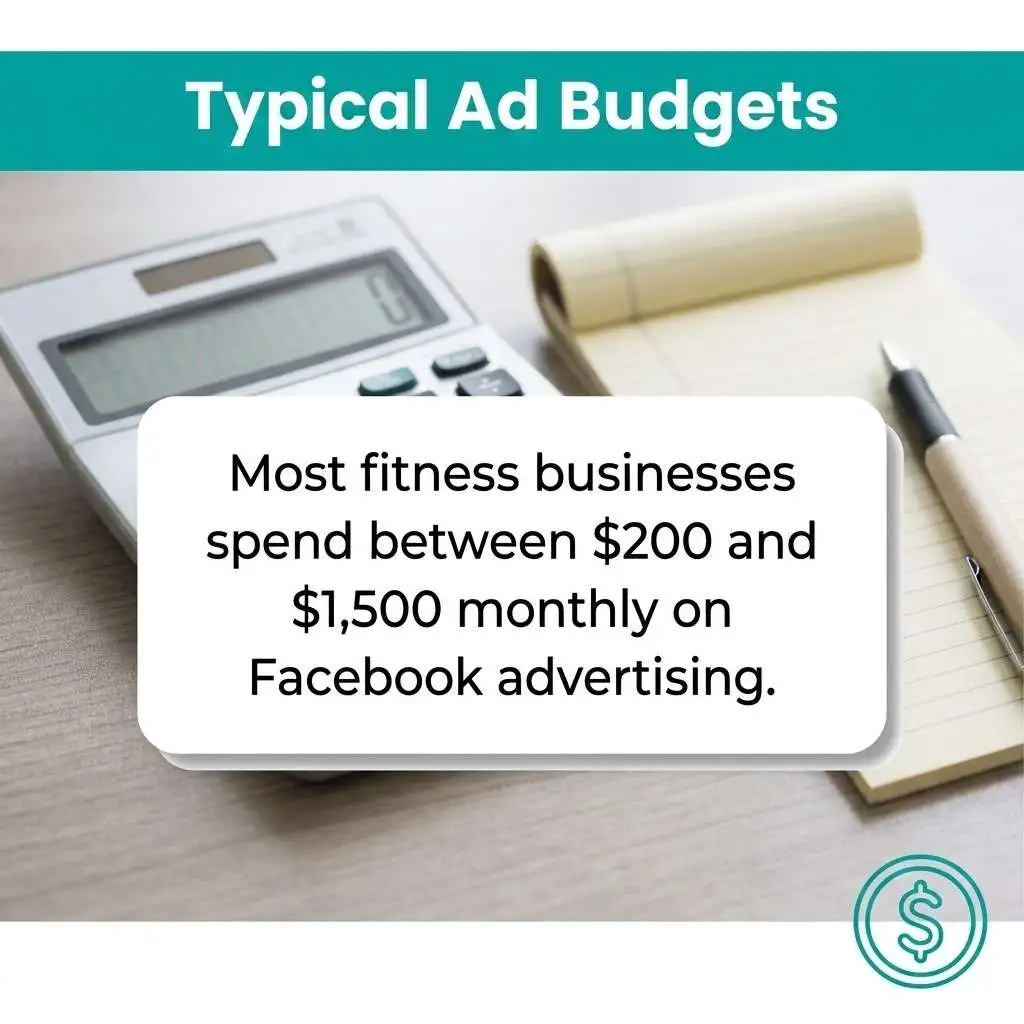
Most fitness businesses spend between $200 and $1,500 monthly on Facebook advertising. Your specific costs depend on your market and how aggressively you want to acquire clients.
The platform charges in two main ways: cost per click or cost per impression. For personal trainers, cost per lead matters most. This metric shows exactly how much you pay per person who submits their contact information.
The average cost per lead in Facebook ads across all industries is $27.66, though fitness businesses can often achieve lower costs with strong offers, clear targeting, and relevant creative.
Cost per click shows what you pay each time someone clicks your ad. Facebook click costs vary based on audience targeting, competition, and campaign objective, but fitness campaigns can often remain cost-efficient when structured well.
Click-through rate measures how many people click on your ad after seeing it. Higher click-through rates usually indicate that your ad creative, message, and offer are resonating with the right audience. Recent benchmark reports show fitness-related CTRs are higher than in some other industries, though results vary by campaign quality.
Cost per acquisition represents your true client acquisition cost. Aim to keep acquisition costs comfortably below client lifetime value. If a client generates $2,000 in revenue, keeping acquisition costs under $667 can help maintain healthy margins.
Start with enough budget to gather meaningful data. Budgets below $10 per day often yield insufficient data to accurately assess campaign performance.
Plan for a testing phase of at least two weeks. This period lets Facebook's algorithm learn which audience segments respond best to your ads.
Calculate your maximum acceptable cost per lead based on conversion rates. If 20% of leads become clients and each client is worth $2,000, you can spend up to $400 per lead profitably.
Budget allocation should be split between testing and scaling. Reserve 30% of your monthly budget for testing new ad variations. Use the remaining 70% on proven performers.
Both platforms work for generating personal training leads. Your choice depends on your target demographic and content style.
Facebook users skew slightly older with more detailed profile information. This demographic often has higher disposable income to spend on personal training services. The platform works well for targeting professionals aged 35-55.
Instagram attracts a younger, more visually-oriented audience. The platform excels for trainers who create compelling transformation photos and workout videos. Users aged 25-40 engage heavily with fitness content here.
Running ads on both platforms through a single campaign often delivers the best results. Facebook's Ads Manager lets you select both placements simultaneously, maximizing your reach.
Facebook Feed appears in the main newsfeed, where users spend most of their time. This placement generates high engagement but faces more competition from other content.
Instagram Feed provides a clean, visual environment perfect for before-and-after photos. The platform's fitness-focused user base responds well to personal training offers.
Stories placements appear full-screen between user-generated content. These vertical video ads create immersive experiences that drive strong response rates.
Reels on Instagram work similarly to Stories but appear in a dedicated section. This newer format attracts users actively seeking short-form video content.
Local business pages running Facebook and Instagram ads generate 68% higher engagement than national accounts when using radius targeting properly.
Account setup creates the foundation for all your advertising. Follow these steps to establish your presence correctly.
You need three components: a Facebook Business Page, access to Meta Business Suite, and a payment method. Each plays a specific role in campaign management.
Visit Facebook's page creation tool to start. Select "Business or Brand" as your page type.
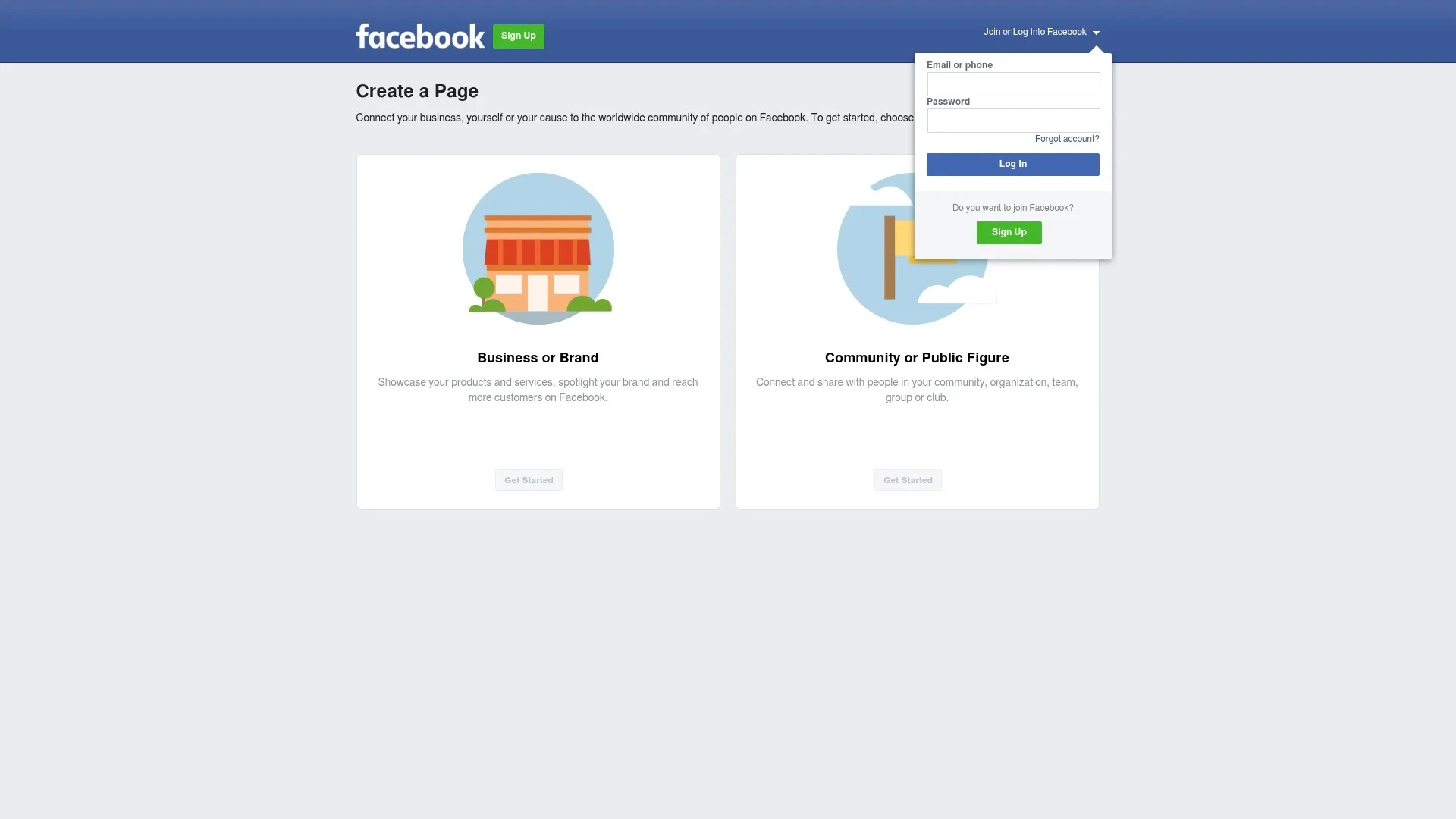
Choose "Fitness Trainer" or "Gym/Physical Fitness Center" as your category. This classification helps Facebook understand your business type to optimize your ads.
Add complete business information, including your location, hours, and contact details. Complete profiles receive higher trust scores from potential clients.
Upload a professional profile picture showing you training clients or in workout gear. Your cover photo should showcase client transformations or your training environment.
Navigate to Meta Business Suite after creating your page. Click "All Tools" and select "Ads Manager" from the menu.
Connect your Facebook Business Page to your ad account. This linking allows you to run ads promoting your page and services.
Add a payment method under the billing section. Facebook accepts credit cards, debit cards, and PayPal for ad spending.
Set your account currency and time zone carefully. These settings lock permanently once you run your first ad.
Connect your Facebook Business Page to your ad account. This linking allows you to run ads promoting your page and services.
Add a payment method under the billing section. Facebook accepts credit cards, debit cards, and PayPal for ad spending.
Set your account currency and time zone carefully. These settings lock permanently once you run your first ad.
The Meta Pixel tracks visitor actions on your website. This tracking code helps measure ad performance and build retargeting audiences.
Access the Events Manager within Meta Business Suite. Click "Connect Data Sources" and select "Web" to create your pixel.
Copy the pixel code and paste it into your website's header section. Most website builders, such as WordPress, offer simple pixel integration via plugins.
Test your pixel installation using the Meta Pixel Helper browser extension. This tool confirms that the pixel fires correctly when visitors load your pages.
Facebook Ads operates on a three-tier hierarchy. Understanding this structure prevents confusion and helps you organize campaigns effectively.
The campaign level defines your objective. The ad set level controls targeting and budget. The ad level contains your creative elements and copy.
Your campaign objective tells Facebook what action you want people to take. Personal trainers typically use "Lead Generation" or "Messages" objectives.
Lead Generation campaigns collect contact information through forms that appear directly on Facebook. Users fill out these forms without leaving the platform.
Messages campaigns send interested people to Messenger or WhatsApp to start conversations. This approach works well for trainers who prefer initial phone consultations.
Traffic campaigns send people to your website landing page. Use this objective when you have a strong website presence and conversion tracking setup.
Ad sets control your targeting parameters, budget, and schedule. You can run multiple ad sets within one campaign to test different audiences.
Budget allocation happens at the ad set level. Set daily budgets for consistent spending or lifetime budgets for campaigns with end dates.
Schedule controls let you run ads only during specific hours or days. Personal trainers often schedule ads to run during lunch hours and in the evenings, when prospects browse social media.
Individual ads include your images, videos, headline, and description. Each ad set can contain multiple ads for testing different creative approaches.
The platform automatically rotates your ads, showing the best performers more frequently. This optimization improves campaign efficiency over time.
You can duplicate successful ads to other ad sets while maintaining the same creative elements. This technique scales winning combinations across different audiences.
Lead-generation campaigns efficiently capture prospect information. This campaign type works perfectly for personal trainers looking to build their client pipeline.
Start by clicking "Create" in Ads Manager. Select "Lead Generation" as your campaign objective from the list of options.
Name your campaign clearly using a format like "PT Leads - [Location] - [Month/Year]". Clear naming helps you track performance across multiple campaigns.
Facebook's lead forms appear when users click your ad. Design these forms to collect essential information without overwhelming prospects.
Choose between "More volume" and "Higher intent" form types. More volume pre-fills user information for quick submissions. Higher intent requires manual entry, filtering out less serious leads.
Request name, email, and phone number at a minimum. You can add custom questions about fitness goals, preferred training times, or experience level.
Include a clear link to your privacy policy that explains how you'll use their information. This transparency builds trust and complies with data protection regulations.
Completion rates for Facebook lead forms typically exceed 30%. Keep forms short to maintain high conversion rates.
Your ad copy should speak directly to your ideal client's pain points. Focus on specific transformations rather than general fitness benefits.
Headlines should grab attention immediately. Use formats like "Lose 20 Pounds in 90 Days" or "Build Muscle Fast With Custom Training Plans."
The primary text describes your unique approach and qualifications. Mention certifications, specializations, and what makes your training different from competitors.
Call-to-action buttons should match your offer. "Learn More" works for general inquiries, while "Sign Up" works better for limited-time promotions.
Users actively ignore promotional content. Write authentically about how you help clients achieve real results.
Precise targeting separates profitable campaigns from money-wasting experiments. Facebook provides detailed options to reach your exact client profile.
Location targeting creates the foundation for local personal trainers. Set a radius around your gym or training facility to target only nearby prospects.
Choose your primary training location as the center point. Set a radius between 5 and 15 miles, depending on your market density.
Urban areas support smaller-radius targeting because more potential clients live nearby. Suburban and rural trainers need larger radius settings to reach sufficient audiences.
Exclude locations you don't want to travel to. If you only train clients in specific neighborhoods, exclude surrounding areas to prevent wasted ad spend.
Test multiple radius sizes simultaneously through separate ad sets. Compare performance between tight 5-mile targeting versus broader 15-mile reach.
Age ranges should reflect your ideal client demographics. Most personal trainers target 25-55 year olds with discretionary income for training services.
Gender targeting depends on your specialization. Trainers who focus on postpartum fitness or women's strength training target women exclusively. Others leave this option open to both genders.
Language settings ensure your ads reach people who speak the language of your ad copy. Set this to English for US markets unless you offer bilingual training.
Interest targeting finds people based on pages they like and content they engage with. Layer multiple relevant interests to effectively narrow your audience.
Fitness interests include specific activities like yoga, CrossFit, marathon running, or bodybuilding. Target interests matching your training specialization.
Behavior targeting identifies people based on actions like gym membership purchases or fitness app usage. These behaviors indicate active interest in fitness solutions.
Combine interests with demographics to precisely define the audience. A 30-45-year-old male within 10 miles who likes weightlifting creates a focused audience segment.
Lookalike audiences find new people similar to your existing clients. Upload your client email list to create a custom audience first.
Facebook analyzes your client list and identifies common characteristics. The platform then finds similar users to target with your ads.
Set lookalike percentage between 1-5%. Lower percentages match your client profile more closely but reach fewer people. Higher percentages expand reach but reduce similarity.
Test lookalike audiences after you've gathered at least 50-100 leads through initial campaigns. This data volume gives Facebook enough information to create accurate matches.
Your ad creative determines whether people stop scrolling or ignore your message completely. Personal trainers need authentic, results-focused visuals that build immediate trust.
Stock photos fail in fitness advertising. Prospects recognize generic gym images instantly and scroll past without engaging.
Use real photos of you training actual clients. These authentic images build credibility and clearly show your working style.
Before-and-after transformation photos generate strong engagement. Show real client results with their permission to demonstrate your training effectiveness.
Action shots of you demonstrating exercises or coaching clients work well. These images prove you're an active trainer, not just someone selling programs.
Ensure proper lighting and image quality. Blurry or dark photos reduce perceived professionalism and hurt click-through rates.
Include minimal text on images since Facebook limits text coverage. Keep any overlay text under 20% of the total image area for optimal delivery.
Short workout demonstrations effectively showcase your training style. Create 15-30-second clips that show exercise techniques or quick training tips.
Client testimonial videos build trust through social proof. Record a video of satisfied clients explaining their transformation journey and their experience working with you.
Behind-the-scenes content humanizes your brand. Show your training facility, equipment, and a typical session.
Add captions to all videos since most users watch with sound off. Clear text ensures your message comes through regardless of audio settings.
Single-image ads work well for straightforward offers and client transformations. These simple formats load quickly and deliver clear messages.
Carousel ads display multiple images in one ad unit. Use this format to show different training programs or multiple client results.
Video ads generate higher engagement but require more production effort. Start with simple smartphone videos before investing in professional production.
Collection ads combine video with product catalogs. This format works for trainers selling multiple program tiers or training packages.
Strategic budget allocation maximizes learning while minimizing waste. Personal trainers should approach Facebook Ads as a testing process, not as a means to instant results.
Allocate your initial budget across multiple ad sets to test different variables. This approach identifies winning combinations faster than running single campaigns.
Plan for a minimum two-week testing period. This duration gives Facebook's algorithm time to optimize delivery and gather performance data.
Create 3-4 ad sets targeting different audience segments. Test variations in age ranges, interests, and geographic radius simultaneously.
Run 2-3 ad variations within each ad set. Test different images, headlines, and ad copy to identify the most compelling combinations.
Set daily budgets between $10-20 per ad set during testing. This spending level generates enough data without excessive financial risk.
Identify your best-performing ad sets after the testing phase. Look for combinations delivering leads below your target cost per acquisition.
Increase budgets gradually on winning ad sets. Jump increases of 20-30% daily allow continued optimization without shocking the algorithm.
Duplicate successful campaigns to reach new audience segments. Apply the same creative and messaging to lookalike audiences or adjacent geographic markets.
Pause underperforming ad sets that exceed your maximum acceptable cost per lead. Redirect budget to proven performers for better overall efficiency.
Monitor campaign performance at least 3 times per week. Regular checks catch performance drops early before significant budget waste occurs.
Refresh ad creative every 4-6 weeks to combat ad fatigue. Even successful ads lose effectiveness as audiences see them repeatedly.
Test new audiences quarterly to find untapped market segments. Your initial target audience may not represent your full potential reach.
Track metrics beyond cost per lead, including show-up rates and conversion to paying clients. A lower cost per lead means nothing if leads don't become revenue.
Accurate tracking separates profitable campaigns from budget drains. Personal trainers must monitor specific metrics to optimize spending effectively.
Meta Ads Manager provides detailed performance data for every campaign, ad set, and individual ad. Learn which metrics matter most for your business goals.
Cost per lead shows your acquisition cost for each contact submission. This primary metric directly determines campaign profitability.
Lead volume indicates how many prospects your campaign generates. Balance quality and quantity by tracking which campaigns produce paying clients.
Click-through rate measures ad engagement effectiveness. Low CTRs suggest your creative or targeting needs adjustment.
Conversion rate from lead to client reveals campaign quality. High-volume, low-conversion campaigns waste resources despite seeming successful.
Download leads from Ads Manager as soon as notifications arrive. Contact leads within 1 hour for 7x higher qualification rates.
Create a spreadsheet tracking lead source, contact attempts, and conversion status. This manual tracking identifies which campaigns produce actual clients.
Use CRM software to automate follow-up sequences. Automated reminders ensure no leads slip through without proper contact attempts.
Tag leads by campaign name in your tracking system. This organization shows which specific ads and targeting combinations drive client conversions.
Calculate actual return on ad spend by tracking client lifetime value. Divide total ad spend by new client revenue to determine profitability.
Include only clients who came specifically from Facebook Ads in your calculations. Mixing organic and paid sources creates inaccurate performance pictures.
Factor in client retention and referrals generated from Facebook-sourced clients. Initial acquisition costs decrease significantly when clients stay long-term.
Compare Facebook Ads ROI against other marketing channels. This analysis helps you allocate overall marketing budgets most effectively.
Personal trainers make predictable errors when starting with Facebook Ads. Learning from these mistakes saves money and accelerates success.
Boosting posts seems simple, but it lacks the targeting power of proper campaigns. The boost button significantly limits audience options and objective selections.
Targeting too broadly wastes budget on unqualified prospects. An audience of 500,000 people includes mostly individuals who'll never hire a trainer.
Targeting too narrowly limits reach below viable levels. Audiences under 10,000 people restrict delivery and increase costs unnecessarily.
Ignoring geographic targeting sends ads to people too far from your training location. Set maximum radius limits matching your actual service area.
Neglecting age targeting results in ads being shown to demographics unlikely to afford personal training. Focus budgets on age ranges with both fitness interest and disposable income.
Using stock photos instead of real client images instantly kills credibility. Prospects recognize generic fitness photos and dismiss them immediately.
Writing vague ad copy that could apply to any trainer fails to differentiate. Specific details about your approach and specialization convert better.
Overloading images with text triggers delivery restrictions. Facebook limits ad reach when there is excessive image text coverage.
Creating ads without clear calls to action leaves prospects confused about next steps. Every ad needs explicit instructions on how to proceed.
Starting with an insufficient budget prevents proper campaign learning. The algorithm needs volume to identify optimal delivery patterns.
Stopping campaigns too early before gathering meaningful data wastes initial spending. Most campaigns require 7-14 days before showing true performance.
Failing to follow up with leads quickly destroys campaign effectiveness. Even perfect ads fail when lead response takes days instead of hours.
Running campaigns without clear client conversion tracking makes optimization impossible. You must know which campaigns produce paying clients, not just leads.
The key now is to take action, stay consistent, and improve as data comes in. Focus on strong offers, fast follow-up, and learning which audiences and messages perform best.
Track leads, consultations, and new clients to make smarter decisions and scale what is working.
As your inquiries grow, the right systems make everything easier. PT Distinction helps personal trainers manage leads, track client progress, and deliver professional coaching without the admin overload.
Try PT Distinction free and create a smoother path from first enquiry to long-term client.
Ready to join the family?
We'll get you up and running in no time. Start with our zero-risk free trial and build your personal training empire today.