


Most personal trainers spend on marketing without knowing if they're investing wisely or simply burning cash.
The difference between these approaches is understanding your client lifetime value and acquisition costs before setting your budget.
The broader fitness industry is projected to generate nearly $240 billion by 2034.
Your share of that market depends entirely on how strategically you allocate your marketing budget.
This guide will help you calculate the exact marketing budget for your personal training business.
You'll learn to determine client lifetime value, calculate acquisition costs, and allocate funds across channels that actually convert.
We'll cover percentage-based budget recommendations, channel allocation strategies, and ROI tracking methods.
By the end, you'll have a complete framework for making confident marketing investment decisions in 2026.
Marketing is an investment in your fitness business, not an expense to minimise. The right budget helps you acquire clients systematically rather than relying solely on referrals.
Without a structured marketing budget, personal trainers often underspend during growth phases and overspend on ineffective channels.
This creates inconsistent client acquisition and unpredictable revenue.
Your marketing budget determines how many potential clients see your services.
It controls your visibility in a highly competitive social media market for personal trainers, with many coaches vying for attention.
Strategic budget allocation allows you to test different marketing channels. You can identify which platforms deliver the best return on investment for your specific target audience.
The fitness industry rewards trainers who approach marketing with business discipline.
Your budget should reflect your revenue goals and growth stage.
Start by examining your current monthly revenue and annual projections. These figures form the baseline for all budget calculations.
Small businesses are often advised to allocate 5–10% of revenue to marketing to support steady growth. This percentage serves as your starting framework.

Calculate your baseline marketing budget using this simple formula: Monthly Revenue × Budget Percentage = Monthly Marketing Budget.
For a trainer earning $8,000 per month, a 7% allocation is $560 per month for marketing activities. This provides a realistic starting point for most solo practitioners.
New fitness businesses require greater marketing investment during the launch phase. Established trainers with consistent referrals can maintain lower percentages.
Solo trainers often allocate 8–12% of revenue to marketing. This higher allocation helps build initial brand awareness and momentum for client acquisition.
Established studios with steady client flow can reduce maintenance marketing to 5–7%. Your budget should decrease as organic referrals increase.
Online personal trainers typically allocate 12–20% due to digital advertising costs. The virtual market demands consistent paid visibility to compete effectively.
Build seasonal adjustments into your annual marketing budget. January typically requires increased spending as fitness motivation peaks.
Reserve 15–20% of your total marketing budget for testing new channels. This allows experimentation without risking your core acquisition strategies.
Review and adjust your budget quarterly based on actual performance. Marketing investments should respond to changing conversion rates and client acquisition costs.
Customer lifetime value is the total revenue a client generates over the duration of their relationship with your fitness business. This metric determines how much you can afford to spend acquiring each new client.
Calculate basic LTV using this formula: Average Monthly Client Payment × Average Client Retention (months) = Customer Lifetime Value.
A client paying $200 monthly who stays for 12 months generates $2,400 in lifetime value. This figure guides your maximum acceptable acquisition cost.
Premium fitness and nutrition packages can be structured to automatically upgrade clients upon graduation from your flagship program or upon signing up for the VIP package.
These higher-ticket offerings dramatically increase your lifetime value per client.
High-ticket transformation packages (e.g., over $ 1000 per 6-week period) can increase LTV and justify higher CAC.
Package your services into transformation or other goal-specific programmes rather than single sessions. Clients commit longer and pay more upfront, improving your cash flow and LTV simultaneously.
Add nutrition coaching, programme design, and accountability tracking to standard training.
These value-additions justify higher prices and strengthen client relationships.
Client retention directly multiplies your lifetime value calculation. A client staying 24 months instead of 12 doubles their value to your business.
Focus on engagement strategies that sustain client commitment beyond initial motivation. Regular progress reviews, goal adjustments, and community building all improve retention rates.
Track average client retention monthly to monitor LTV trends. Declining retention signals the need for service improvements or better client screening during acquisition.
CAC is a fundamental marketing principle for 2026 planning. This metric reveals exactly how much you spend to acquire each paying client.
Calculate CAC using this formula: Total Marketing Spend ÷ Number of New Clients Acquired = Customer Acquisition Cost.
If you spend $2,000 on marketing each month and acquire 10 new clients, your CAC is $200 per client. This number must remain below your LTV to sustain profitable growth.
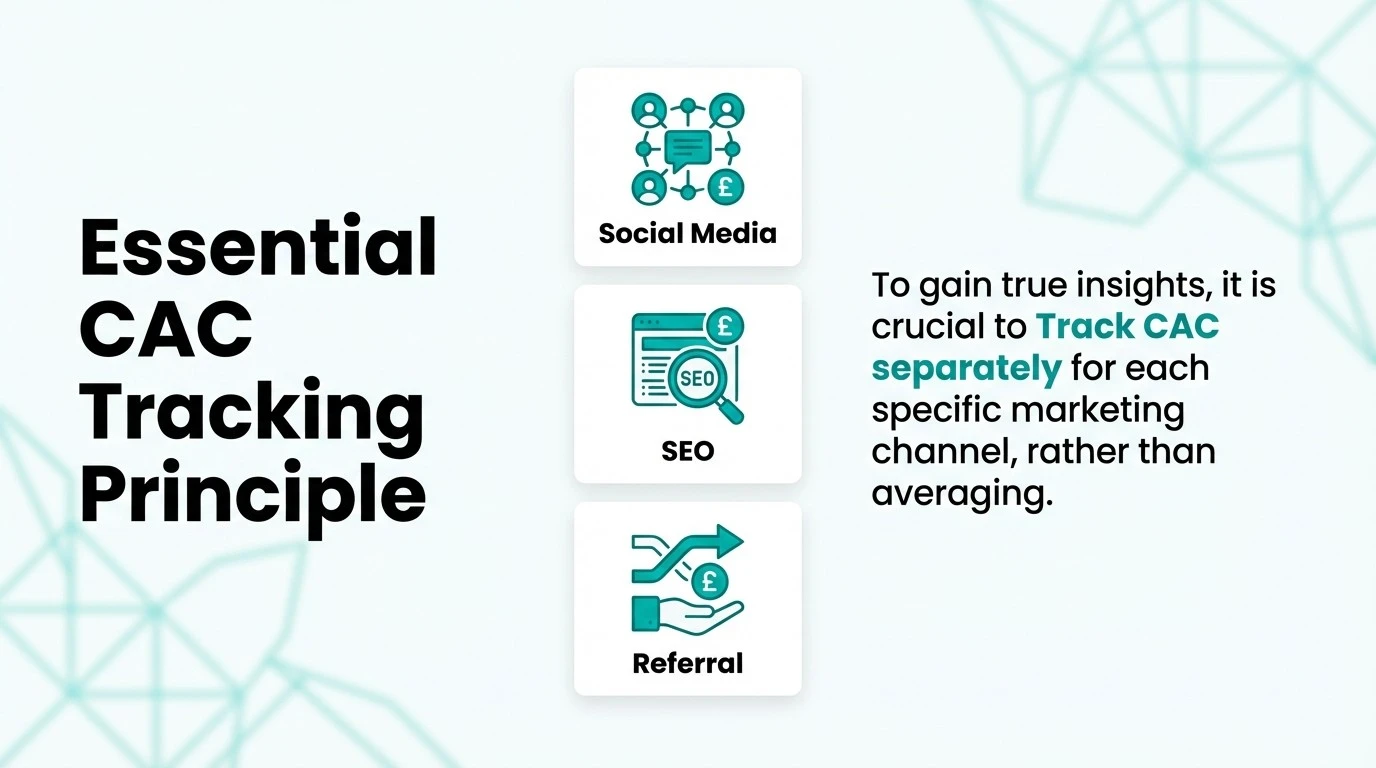
Different marketing channels produce vastly different acquisition costs. Social media advertising, SEO, and referral programmes each carry unique cost structures.
Track CAC separately for each marketing channel you use. This reveals which platforms deliver the most cost-effective client acquisition for your specific business.
Paid advertising typically shows immediate but higher CAC. Organic strategies such as SEO and content marketing start more slowly but reduce acquisition costs over time.
Your LTV-to-CAC ratio determines the sustainability of your marketing budget. Healthy fitness businesses maintain a 3:1 or higher ratio.
A client with a $2,400 LTV and a $200 CAC yields a 12:1 ratio. This indicates highly efficient marketing spend, with room to increase the budget.
Ratios below 3:1 signal unsustainable acquisition costs. You're spending too much relative to client value, which requires either improving LTV or reducing CAC.
The standard marketing budget for personal trainers ranges from 5% to 12% of gross revenue.
Your specific percentage depends on business stage, market competition, and growth objectives.
New personal training businesses should allocate 10–15% of revenue to marketing. This higher investment builds initial brand awareness and client acquisition momentum necessary for survival.
Established trainers with consistent client flow can maintain a 6–8% ongoing marketing rate.
This maintains visibility whilst relying more heavily on referrals and repeat business.
Online personal trainers typically allocate 12–20% of revenue to marketing efforts. The digital marketplace requires continuous paid visibility to compete against thousands of virtual fitness coaches.
In-person trainers benefit from local market constraints and relationship-based referrals. Their marketing budgets can stay at the lower end of the standard range once established.
Hybrid models combining online and in-person training require flexible budgets. Allocate higher percentages to whichever revenue stream needs growth acceleration.
A solo trainer earning $5,000 per month with a 10% marketing allocation has $500 per month to invest. This covers basic social media advertising, website hosting, and content creation tools.
A growing studio generating $20,000 monthly at 8% allocation has $1,600 for marketing. This budget supports multiple channels, including paid advertising, SEO investment, and occasional event marketing.
Consider the payback period when setting percentages. Higher initial acquisition costs become acceptable when client LTV and retention justify the investment.
Strategic budget allocation across marketing channels determines acquisition success. Your distribution should reflect where your target clients spend attention and which platforms convert most effectively.
Start with the 60% margin rule for sustainable allocation. Never spend more than 60% of expected client lifetime value on acquisition costs, leaving room for business operating expenses.
Social media advertising typically receives 30–40% of total marketing budgets for personal trainers. Platforms like Instagram and Facebook deliver targeted reach to fitness-conscious demographics.
SEO and website investment should claim 20–30% of your marketing budget. This creates long-term organic visibility, reducing acquisition costs over time.
Allocate 15–25% to content marketing and email campaigns. These channels nurture leads and improve conversion rates without ongoing paid advertising costs.
Reserve 10–15% for testing emerging platforms and marketing experiments. This allows adaptation to changing client behaviour and platform algorithm updates.
Social Media Ads (30–40%)
Focus on immediate lead generation and building brand awareness through platforms like Facebook, Instagram, or TikTok.
SEO and Website (20–30%)
Invest in long-term organic visibility and building credibility with strong website content, blog articles, and search engine optimisation.
Content and Email (15–25%)
Support lead nurturing and conversion optimisation with consistent email marketing, newsletters, and helpful content.
Testing Budget (10–15%)
Allocate funds for experimentation with new marketing channels, tools, or strategies to stay ahead of trends and uncover new growth opportunities.
Local personal trainers may allocate 10–20% of their budget to traditional marketing. Community events, partnerships with local businesses, and printed materials still generate qualified leads in specific markets.
Evaluate traditional marketing through the same ROI lens as digital channels. Track leads and conversions from each traditional tactic to justify continued investment.
Geographic targeting determines traditional marketing value. Urban trainers often find better returns from digital channels, whilst suburban and rural markets still respond to local advertising.
Marketing budget structures vary dramatically based on business maturity. New fitness businesses face different challenges than established operations with steady client flow.
Newly launched personal trainers should allocate 12–15% of projected revenue to marketing. This higher percentage compensates for zero brand awareness and limited referral networks.
Prioritise immediate lead generation channels during launch phases. Social media advertising and local community engagement deliver faster results than long-term SEO strategies.
New businesses should allocate budgets as follows: 50% to paid advertising, 30% to website and branding, 20% to content creation. This emphasises rapid client acquisition whilst building foundational marketing assets.
Accept higher initial CAC during launch periods. Your first clients cost more to acquire but generate referrals that reduce future acquisition expenses.
Established trainers with consistent cash flow can reduce marketing budgets to 6–8% of revenue. Strong referral networks and brand recognition reduce dependence on paid acquisition.
Shift budget allocation towards retention and referral optimisation. Email marketing, client appreciation events, and referral incentive programmes maintain a steady client flow.
Mature businesses benefit from rebalanced spending: 30% paid advertising, 40% SEO and content, 30% retention and referrals. This reflects the compound benefits of earlier marketing investments.
Scale marketing spend proportionally to accelerate growth. Established businesses have proven conversion funnels that justify increased advertising investment.
Larger fitness operations typically allocate 7–10% of their marketing budgets. Multiple revenue streams and diverse service offerings require broader coverage of marketing channels.
Studios can justify hiring dedicated marketing roles or agencies. Professional marketing support becomes cost-effective when monthly budgets exceed $2,000.
Allocate portions of your studio budget to individual trainer promotion. Personal brands within your facility drive both individual and collective client acquisition.
Return on investment tracking determines whether your marketing budget generates profitable client acquisition. Without measurement, you're gambling rather than investing strategically.
Calculate marketing ROI using this formula: (Revenue from Marketing - Marketing Cost) ÷ Marketing Cost × 100 = ROI Percentage.
A $500 marketing campaign that generates $2,000 in new client revenue yields a 300% ROI. This indicates a highly effective budget allocation, warranting increased investment.
Monitor monthly lead generation rates across all marketing channels. Track how many potential clients each platform delivers to your enquiry system.
Measure lead conversion rates from initial contact to paying client. This reveals whether your sales process effectively converts marketing-generated leads into revenue.
Track cost per lead (CPL) alongside cost per acquisition (CPA). Understanding both metrics helps identify whether marketing targets or sales processes need to be optimised.
Calculate average time-to-conversion for new clients. Longer conversion cycles require larger marketing budgets to maintain consistent monthly client acquisition.
Use Google Analytics to track website traffic sources and conversion paths. This free tool reveals which marketing channels drive the most valuable website visitors.
Implement Facebook Ads Manager tracking for social media campaign performance. Platform-specific analytics show exactly which ad creatives and targeting generate leads most cost-effectively.
Consider customer relationship management software, such as PT Distinction, to track client acquisition sources. Proper CRM implementation connects marketing activities directly to revenue outcomes.
Create a simple spreadsheet tracking system if sophisticated tools exceed your current budget. Manual tracking still provides the essential data needed for informed budget allocation decisions.
Review marketing performance data monthly to identify underperforming channels. Reallocate budget from low-ROI activities to channels with superior client-acquisition efficiency.
Test budget increases on your highest-performing channels first. Scaling proven marketing strategies typically delivers more predictable results than experimenting with entirely new platforms.
Document seasonal patterns in your marketing performance data. Client acquisition costs and conversion rates often fluctuate based on calendar periods and fitness motivation cycles.
Discounting is effectively a hidden marketing cost, with businesses generally discounting around 18% of their revenue. Factor promotional pricing into your true CAC calculations for accurate ROI assessment.

Your personal training marketing budget determines the success of client acquisition in an increasingly competitive fitness market.
Strategic allocation based on LTV, CAC, and proven channel performance separates growing businesses from struggling ones.
Start with revenue-based percentages appropriate for your business stage. New trainers allocate 10–15% whilst established operations maintain 6–8% for sustainable growth.
Calculate client lifetime value and acquisition costs before finalising budget allocations. These metrics reveal precisely how much you can afford to invest in client acquisition whilst maintaining profitability.
Distribute your budget strategically across digital channels that reach your target audience. Social media advertising, SEO investment, and content marketing each serve distinct purposes in your acquisition funnel.
Track performance metrics religiously and adjust allocations quarterly. Marketing budgets should be driven by actual conversion data rather than assumptions about channel effectiveness.
The fitness industry continues to expand, with the wellness market estimated at $6.8 trillion. Your marketing budget determines how much of that opportunity reaches your personal training business.
Begin implementing these budget frameworks immediately. Calculate your current LTV and CAC, set appropriate revenue percentages, and start tracking channel-specific performance this month.
Ready to streamline your client management and marketing tracking? Start your free trial of PT Distinction today and discover how the right software helps you maximise every marketing pound you invest.
Ready to join the family?
We'll get you up and running in no time. Start with our zero-risk free trial and build your personal training empire today.