A youth fitness certification gives personal trainers the credentials to design safe, age-appropriate fitness programs for children and adolescents ages 6 to 19. Top providers, including NASM, ACE, ACSM, ISSA, and WITS, offer specialized courses covering child exercise physiology, motor skill development, and youth-specific program design.
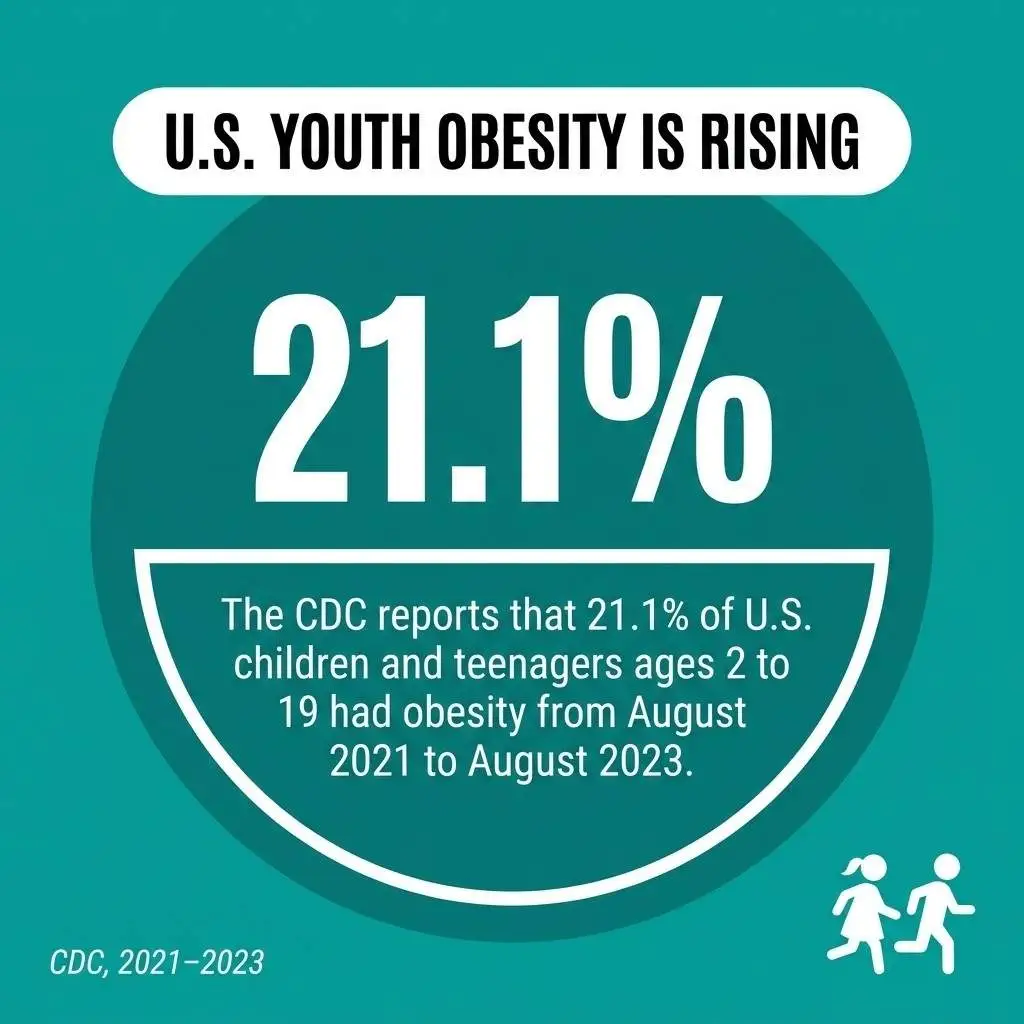
The CDC reports that 21.1% of U.S. children and teenagers ages 2 to 19 had obesity between August 2021 and August 2023, and the physical activity grade for U.S. youth was D for overall physical activity in 2024, with only 21–28% of 6–17 year olds meeting the recommended 60 minutes of daily activity, according to the Physical Activity Alliance.
Those two numbers together tell you everything about why this specialization matters right now.
Working with young clients is genuinely different from training adults. The physiology is different. The communication style is different. And the stakes, for building lifelong fitness habits or derailing them, are much higher.
If you are a personal trainer considering a youth fitness specialist credential, this guide breaks down what each certification covers, what it costs, and where it can take your career.
A youth fitness certification is a specialized credential that equips personal trainers to design and deliver evidence-based, age-appropriate fitness programs for children and adolescents, covering child exercise physiology, motor skill development, strength-training safety, and behavioral coaching techniques distinct from adult programming.
Most adult training programs assume a client with a fully formed skeletal structure. That assumption falls apart fast with a 12-year-old.
Youth exercise science addresses growth plates, maturation stages, and the fact that a child’s cardiovascular system, neuromuscular coordination, and psychological readiness develop on different timelines. A certified youth fitness specialist learns to account for all of it.
The core curriculum across providers covers similar ground: developmental anatomy and physiology, age-appropriate exercise programming, resistance-training protocols safe for children and adolescents, plyometric-training guidelines, cardiorespiratory conditioning, flexibility, motor skill development, and behavioral strategies for engaging young clients.
Some programs also address parental communication and group management, which are skills you use constantly in real-world youth coaching settings. Getting a qualification that actually matches your client base is the most direct path to better outcomes for those clients.
A youth fitness certification does that work for youth-focused trainers.
The five most widely recognized youth fitness certification providers are NASM, ACE, ACSM, ISSA, and WITS, each offering distinct curriculum emphases, exam formats, and continuing education credit awards for personal trainers seeking to specialize in youth exercise.
Choosing between them is less about prestige and more about fit. What does your current certification require for compatible specializations? What format works for your schedule? Here is how the major providers break down.
NASM has been certifying fitness professionals for more than 35 years, and its Youth Exercise Specialization (YES) course is designed to safely train young athletes with evidence-based, age-appropriate programming.
The YES credential is a self-paced online certification, meaning you can study on your own schedule and take the multiple-choice exam when you're ready.
It awards continuing education credits (CECs) toward your primary NASM credential renewal and covers topics including youth motor development, resistance training for children and adolescents, speed and agility, and plyometric training protocols.
NASM is often the default choice for trainers who already hold the NASM-CPT, since the YES integrates cleanly into their existing renewal cycle.
ACE offers a Youth Fitness Specialist program covering age-appropriate fitness, strength training for youth, and sports conditioning. Like NASM’s offering, it is delivered online and self-paced, with a multiple-choice exam required for certification.
The ACE program places particular emphasis on sports performance contexts, making it a strong option for trainers working with youth athletes in club or school sports settings. It awards CEUs that count toward ACE credential renewal.
ACSM offers continuing education pathways covering youth exercise, though its primary strength lies in clinical and exercise science contexts.
ISSA’s Youth Fitness Certification is structured similarly to NASM and ACE offerings: online, self-paced, with a multiple-choice final exam.
WITS (the World Instructor Training Schools) offers a Youth Fitness Specialist Certification for fitness professionals working in community and school settings, with a focus on practical program delivery for groups of children and adolescents.
All five programs award continuing education units or credits that satisfy renewal requirements for most major primary certifications, including NASM-CPT, ACE-CPT, and ACSM credentials.
Youth fitness certification curricula share a consistent set of core learning modules covering child and adolescent exercise physiology, age-appropriate program design, safety in resistance and plyometric training, motor skill development, and youth-specific behavioral and motivational coaching strategies.
The physiology modules are where most trainers learn the most. Growth and maturation timelines, skeletal development, the role of growth plates in limiting certain loading patterns, and how cardiovascular responses in children differ from those of adults are all covered in depth.
This is not information you can pick up from general personal training education.
The program design modules focus on structuring safe, progressive, and engaging youth exercise sessions.
You will learn to adapt resistance training for children and adolescents, apply plyometric training with appropriate volume and intensity, and build cardiorespiratory conditioning protocols suited to developing bodies.
Motor skill development receives dedicated coverage, since the movement competency a child builds between ages 6 and 12 shapes their athletic capacity for years.
Behavioral and motivational content is the aspect that most trainers underestimate before working with young clients.
Keeping a 10-year-old engaged for 45 minutes requires a different toolkit than coaching an adult. Youth fitness specialist programs build those communication and session management skills explicitly into the curriculum.
For trainers looking to expand their CPD portfolio, a youth fitness certification pairs well with nutrition and sports performance credentials to create a complete youth-athlete service offering.
A youth fitness certification is designed for personal trainers, group fitness instructors, physical education teachers, and coaches who work with, or want to work with, clients between the ages of 6 and 19 and need a credential that validates safe, evidence-based youth exercise programming.
Most providers require a current primary fitness certification (such as NASM-CPT, ACE-CPT, or an equivalent nationally accredited credential) and CPR/AED certification as prerequisites.
Some programs accept enrollment without a primary cert, treating the youth fitness certification as a standalone entry-level credential for professionals coming from physical education or coaching backgrounds.
In 2023, 55.4% of U.S. youth ages 6 to 17 played organized sports according to Project Play’s participation data.
That is a large and active market of young clients, with coaches, parents, and schools actively seeking qualified fitness professionals to support their development. A certified youth fitness specialist has credentials that speak directly to that demand.

This certification makes the most sense for trainers who are already seeing young clients, want to deliberately target that market, or work in school, after-school, or community program settings where youth programming is part of the job description.
Youth fitness certification exams across NASM, ACE, ISSA, ACSM, and WITS are predominantly delivered as online multiple-choice assessments, completed after finishing the course modules, with passing scores typically ranging from 70% to 75%, depending on the provider.
Most programs follow a similar structure: work through the online self-paced course content, complete any required module quizzes or knowledge checks along the way, then sit the final multiple-choice exam.
The exam window, meaning how long you have to complete the exam after enrollment, varies by provider.
NASM and ACE both offer defined study windows, typically 180 days from enrollment, though you should verify current terms directly with each provider before enrolling.
Passing on the first attempt is straightforward if you engage with the material rather than rushing through it.
The content is specific enough that surface-level reading will not carry you through questions on growth plate considerations or appropriate loading parameters for adolescent strength training. Take notes on the physiology sections. Those tend to generate the most exam questions.
If you do not pass on the first attempt, most providers allow retakes for a fee. NASM and ACE both permit retakes within the study window. Check the specific policy before you enroll, so there are no surprises if you need a second attempt.
Youth fitness certification costs range from approximately $199 to $499, depending on the provider and whether you purchase the course alone or with additional study resources, with most programs awarding between 0.5 and 2.0 CEUs or CECs toward primary certification renewal.
Pricing shifts depending on promotions, bundled packages, and whether you need supplementary textbooks or study guides. NASM and ACE both run regular discounts. It is worth checking their official sites before purchasing at full price.
The continuing education credit structure matters a lot if you are managing renewal across multiple credentials.
Most youth fitness certifications award CEUs or CECs that satisfy a portion of your primary certification’s renewal requirement. NASM CECs apply directly to NASM-CPT renewal cycles. ACE CEUs work the same way within the ACE system. ACSM, ISSA, and WITS awards vary, so confirm compatibility with your primary certification body before enrolling.
On expiration: NASM and ACE specializations typically renew on the same cycle as your primary certification, usually every two years, by completing continuing education credits.
Some providers offer non-expiring credentials at the specialist level, meaning once earned, the credential does not require separate renewal beyond maintaining your primary cert. Verify the specific renewal policy with each provider, since these details change.
For a broader look at how to build your CPD course strategy, it helps to map out which certifications share renewal cycles before you invest.
Provider Comparison at a Glance
Note: Pricing and CEU awards are approximate and subject to change. Verify current details directly with each provider before enrolling.
A certified youth fitness specialist can pursue career opportunities across schools, youth sports clubs, community recreation centers, private gyms, after-school programs, summer camps, and independent online coaching businesses, with the Bureau of Labor Statistics projecting 12% employment growth for fitness trainers and instructors from 2024 to 2034.
That growth projection from the BLS Occupational Outlook is notably faster than average for all occupations.
The median annual wage for fitness trainers and instructors was $46,180 in May 2024, though specialists working with youth athletes in private or performance-focused settings often earn above that median, particularly when combining group programming with individual sessions.

The youth sports market is also generating demand from the cost side. Youth sports costs have risen 46% since 2019, according to Project Play’s State of Play 2025, which means families are already investing heavily in their children’s athletic development.
A qualified youth fitness specialist with a credible certification is a natural addition to that investment.
The most common career settings for youth fitness specialists include:
Online delivery is increasingly viable for youth fitness specialists, particularly for program design work sent to parents and supervised at home.
Trainers looking at that model should check out top trainer courses worldwide to see how other specialists structure their professional development for online-first service delivery.
The most common questions about youth fitness certification cover prerequisites, whether a primary certification is required first, exam difficulty, whether the credential is recognized by employers, and how the specialization fits into an existing certification renewal cycle.
Most providers recommend or require a current accredited personal training certification before enrolling. NASM and ACE both list an active primary certification as a prerequisite. ISSA and WITS may accept candidates without one in certain pathways. Check the specific requirements on each provider’s enrollment page before assuming eligibility.
NASM and ACE are both accredited by the National Commission for Certifying Agencies (NCCA), the gold standard for fitness certification in the U.S. ACSM certifications carry strong academic and clinical credibility. ISSA holds DETC accreditation. When employers and parents review credentials, NCCA-accredited certifications from NASM and ACE receive the most immediate recognition.
Most youth fitness certification programs are self-paced, so completion time depends on how much study time you put in each week. Most trainers complete the coursework in four to eight weeks when studying part-time alongside their existing coaching schedule. The online format means you can work through modules at whatever pace fits your week.
Yes. The credential validates your knowledge of age-appropriate exercise programming and safe youth exercise practices. Whether you deliver those programs in person or remotely is a delivery method decision, not a certification restriction. Trainers building online youth coaching services use the same program design principles from the certification and adapt delivery for digital formats.
A youth fitness specialist certification focuses on general health, fitness, and developmental programming for children and adolescents across a broad age range. A sports performance coach typically works within a specific sport context, focusing on speed, strength, and conditioning for competitive youth athletes. The two credentials complement each other, and many specialists hold both.
Once you have the credentials sorted, the practical challenge is to build and deliver programming that young clients actually complete and enjoy.
That is where the systems you use to structure and communicate your programs matter as much as the content itself.
Ready to deliver better coaching to your clients, young or otherwise? PT Distinction gives you everything you need to run your online and hybrid coaching business in one place: from structured program delivery and progress tracking to client communication and automated check-ins. Start your free 1-Month trial and see why thousands of trainers worldwide trust PT Distinction to power their coaching.
Ready to join the family?
We'll get you up and running in no time. Start with our zero-risk free trial and build your personal training empire today.