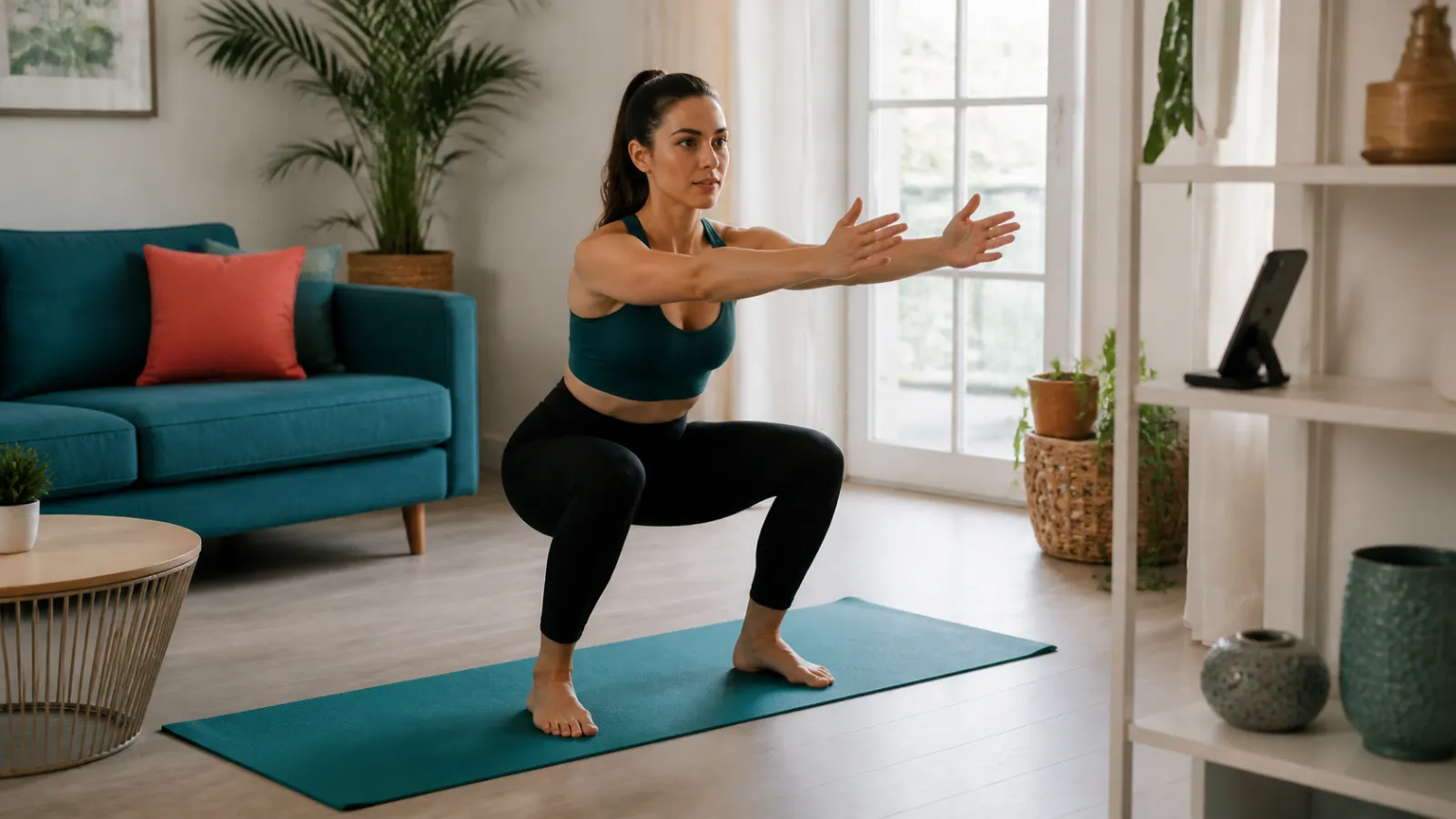


The first session sets the tone. A client who starts with a clear assessment knows where they stand, and you know exactly what to program. Twelve weeks later, the same assessment shows them how far they've come.
That second part is where an assessment earns its keep. Choose tests you can repeat the same way every 6 to 12 weeks, in person or online, and record the results where you and the client can both see them. The first assessment shapes the program. Every one after that proves it's working.
PT Distinction is a personal trainer software platform with ready-made assessments, a demo video and description for each test, and results that sit alongside the rest of your coaching, so the same assessment works for every client and every check point.
A complete assessment covers how the client moves, what they can do now, and the measurements that match their goal. Pick a few tests from each area rather than every test you know.
| Area | What it tells you | Example tests | Works online? |
|---|---|---|---|
| Posture | Imbalances worth watching in the program | Front, side and back photos | Yes |
| Movement screen | How well they squat, hinge, lunge and push | Overhead squat, single-leg balance, lunge | Yes, on video |
| Range of motion | Mobility limits that change exercise choice | Shoulder flexion, hip rotation, ankle mobility | Yes, on video |
| Strength | Starting loads and progressions | Push-up test, goblet squat reps, estimated rep max | Yes, with available equipment |
| Endurance | Muscular stamina | Plank hold, wall sit | Yes |
| Power | Explosive ability, for athletic goals | Vertical jump, broad jump | Yes, with space |
| Cardiovascular | Aerobic fitness | Step test, timed walk or run | Yes |
| Body composition | Progress toward body goals | Weight, waist and hip measurements, photos | Yes |
Match the selection to the client's goal. A client training for a first 10K needs a cardiovascular test. A client returning from a long break needs the movement screen more than a jump test.
Keep health and lifestyle questions in your intake questionnaire, so the assessment itself stays focused on physical tests.
In person, you can watch every rep, cue technique and test closer to maximum effort safely. Use the same order, warm-up, equipment and instructions every time, and write down anything that affects the result, such as a sore shoulder or a different time of day. That's what makes the next assessment a fair comparison.
Online assessments work well when the client has a clear demo of each test and a simple way to send back what they did. There are two ways to run them:
For strength, choose tests that are safe without a spotter, such as rep tests with a set load, rather than maximum lifts.
Every 6 to 12 weeks suits most clients. It's long enough for real change and short enough to keep the goal in view. Line it up with the end of a training block, so the results feed straight into the next program.
Use exactly the same tests each time. A new test tells you something new, but it can't show progress.
The first assessment decides the starting point: exercise choices, loads and the areas to work on. The next ones show whether it's working.
Put the results side by side and show the client. Five more push-ups, two inches off the waist or a deeper squat means more to a client than "you're doing well," and it gives you a natural moment to set the next target or renew a package.
With PT Distinction, every client gets the same structured assessment, and you don't rebuild it each time.
Here's how to create an online assessment in PT Distinction. Between assessments, weekly check-ins keep you up to date on how training is going.
A personal training assessment is a set of tests a trainer uses at the start of coaching to measure a client's posture, movement, mobility, strength, fitness and body measurements. The results set the starting point for the program and give a baseline to compare against later.
Plan for most of a first session. A focused assessment with one or two tests per area keeps it manageable for the client and quick to repeat at each reassessment.
Yes. Most tests work online, either live on a video call or in the client's own time with demo videos, recorded results and video of the movement tests. Avoid maximum strength tests without a spotter.
Every 6 to 12 weeks for most clients, ideally at the end of a training block. Use the same tests each time so the results are comparable.
The first assessment shapes the program and the next one shows the client what they've achieved. Start your 1-month free trial of PT Distinction and share your first assessment from the library today. Every feature is included on every plan.
Ready to join the family?
We'll get you up and running in no time. Start with our zero-risk free trial and build your personal training empire today.