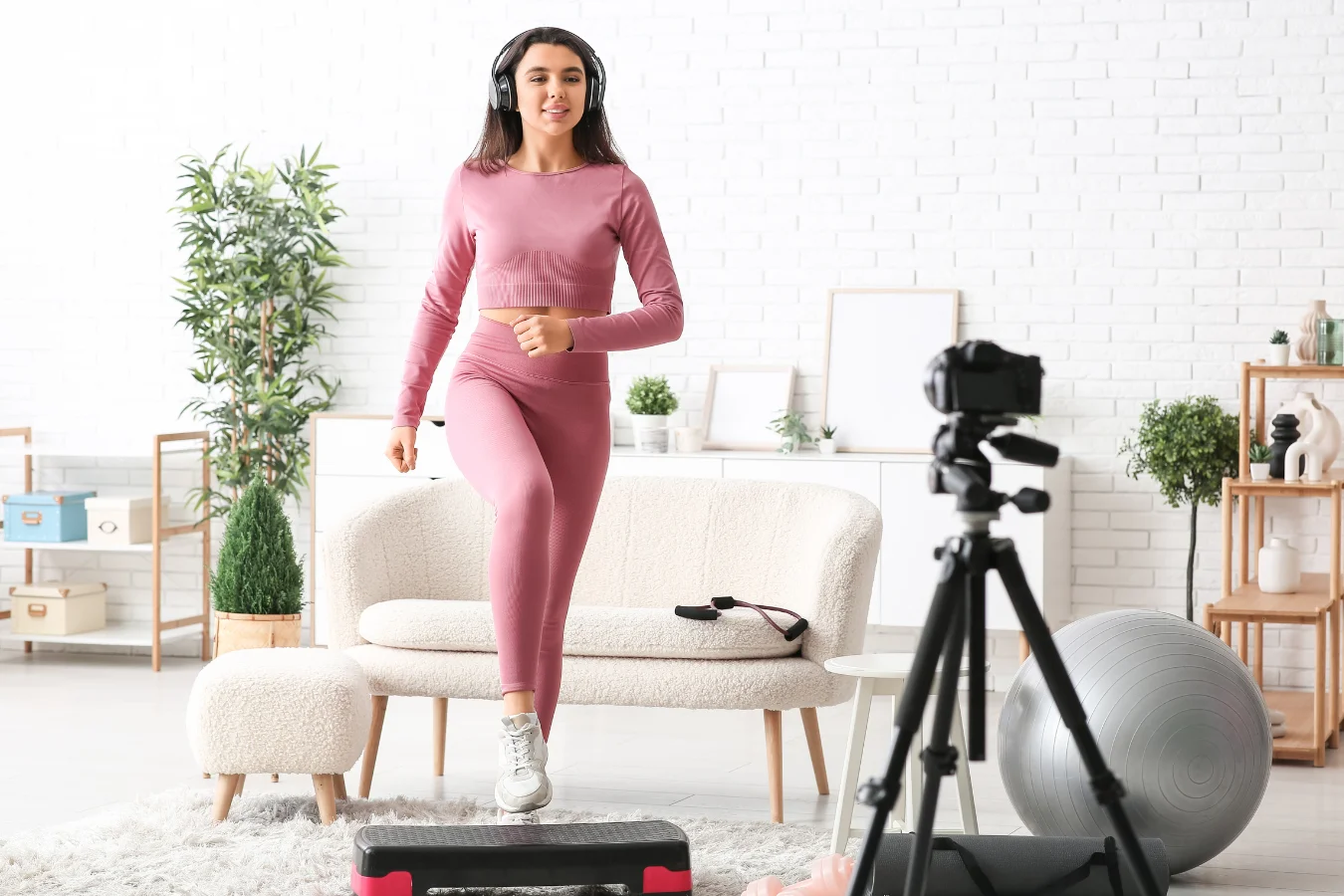


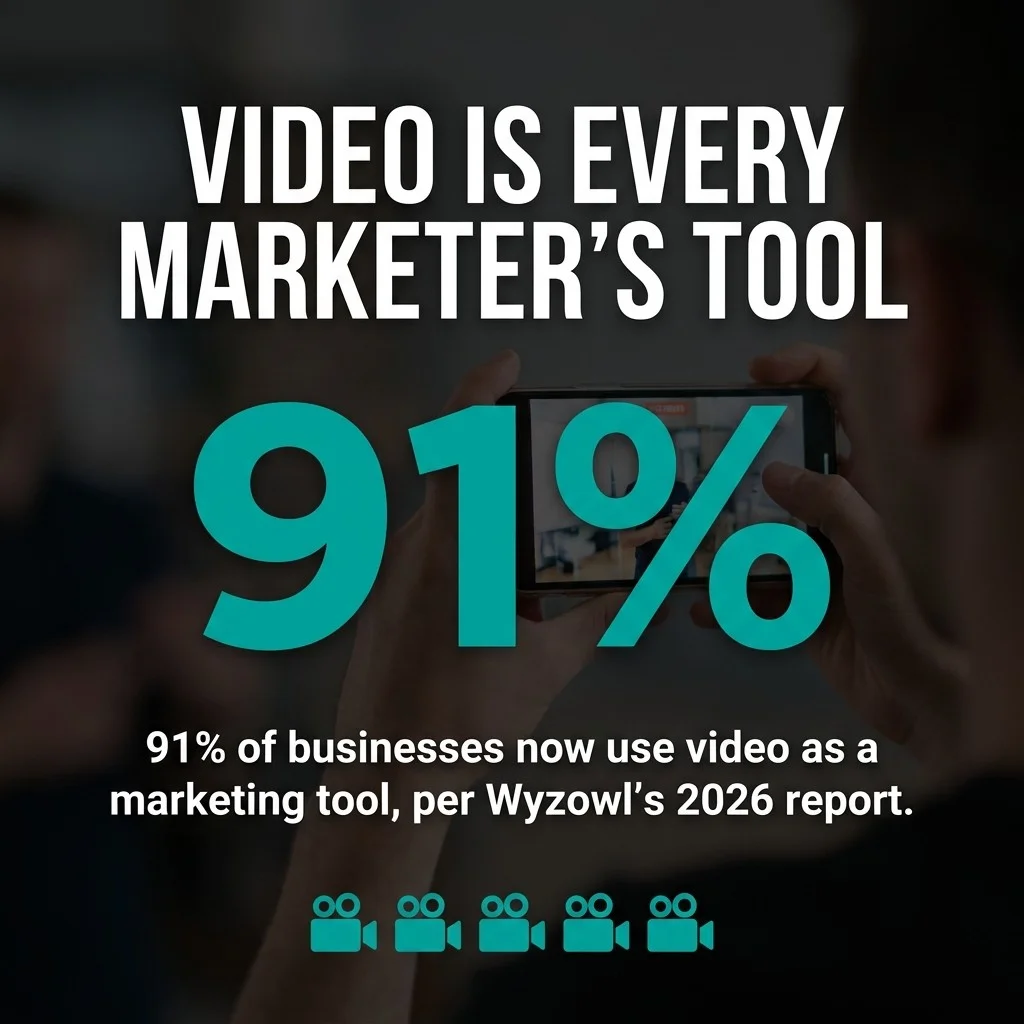
Fitness video content is one of the most direct paths to growing an online training business: on-demand video streaming is projected to acquire 67.4% of the online fitness market share by 2035, according to Future Market Insights. The Wyzowl's 2026 report shows that 91% of businesses use video as a marketing tool.
A deliberate fitness video strategy, built around a clear purpose, consistent production, and a content calendar, separates trainers who grow online from those who post sporadically and wonder why nothing lands.
Most trainers know they should be creating video content. Few have an actual system for it. This guide gives you that system, step by step.
Before building a fitness video content strategy, it helps to understand the different types of videos that support your business goals. The most effective trainers don't rely on a single content format. Instead, they create a mix of educational, promotional, and relationship-building content that serves their audience at different stages of the client journey.
Educational videos help establish credibility and position you as a trusted expert. These videos can cover exercise technique, nutrition fundamentals, common training mistakes, recovery strategies, or answers to frequently asked client questions.
The goal isn't to give away your entire coaching process. It's to demonstrate your expertise and help potential clients understand your approach to health and fitness. Educational content also performs well as part of a broader content marketing strategy for personal trainers and can often be repurposed into blog posts, emails, and social media content.
Exercise demonstrations remain one of the most valuable forms of video content for personal trainers. These videos showcase proper technique, coaching cues, modifications, and progressions while giving viewers a preview of what it's like to learn from you.
Whether you're creating short-form clips for Instagram Reels or longer instructional content for YouTube, exercise demonstrations help build trust and confidence in your coaching abilities. When paired with other forms of engaging fitness content, they can become a powerful tool for attracting and nurturing potential clients.
Nothing builds credibility faster than real client results. Testimonials, transformation stories, and client interviews provide social proof while helping potential clients see what's possible through your coaching.
Focus on the client's journey rather than just the outcome. Sharing the challenges they faced, the strategies they implemented, and the lessons they learned often creates stronger engagement than before-and-after photos alone. Many trainers also incorporate these stories into their broader fitness content marketing efforts to build trust with prospective clients.
Many trainers underestimate how effective behind-the-scenes content can be for building relationships with their audience. Showing your coaching process, daily routines, gym setup, or content creation workflow helps potential clients connect with you as a person rather than simply seeing you as another online fitness professional.
This type of content often performs particularly well on Instagram Stories, Reels, and short-form video platforms. If Instagram is a key part of your marketing strategy, see our guide to Instagram for personal trainers for more ideas.
Questions your clients ask repeatedly are often excellent video topics. Creating short videos that answer common concerns allows you to demonstrate expertise while addressing objections that may be preventing prospective clients from taking the next step.
Topics such as fat-loss myths, strength-training misconceptions, supplement questions, and exercise-technique mistakes can provide a steady source of valuable content for your fitness video strategy. If you're running short on ideas, our collection of social media content ideas for personal trainers can help you build out your content calendar more effectively.
Every fitness video you produce should serve a specific, defined purpose before you pick up a camera.
This sounds obvious. It isn't practiced nearly enough. Too many trainers hit record with a vague idea and end up with content that doesn't convert, doesn't educate, and doesn't build their brand. The fitness video strategy comes first. The filming plan follows.
Ask yourself three questions before every piece of video content:
Your purpose shapes everything downstream: the format, the length, the platform, the call to action. A workout video designed to attract new clients looks very different from one designed to retain existing members. Get clear on the goal before anything else.
The best fitness videos do one job well. Before you start filming, decide what you want the video to achieve. Are you trying to attract new leads, build credibility, educate your audience, or support existing clients? A video designed to generate inquiries will look very different from one created to improve client adherence.
When each video has a clear objective, it's easier to choose the right format, platform, and call to action. It also helps you build a more balanced content mix as part of your overall content marketing strategy for personal trainers.
A fitness video built for a specific target audience performs better than one aimed at everyone, every time.
The online fitness market was worth approximately $28.89 billion in 2025, according to Mordor Intelligence. That is a crowded space. The trainers cutting through it are not the ones with the fanciest equipment. They are the ones who know their target audience well enough to speak directly to them.
Build a simple audience profile before you design your fitness video content strategy. Note your clients' experience levels (beginner, intermediate, advanced), their primary fitness goals, the platforms they actually use, and the time they have available to train. This profile should inform every creative decision you make, from the exercises you demonstrate to the language you use in your video titles.
When your target audience feels seen in your content, they stay. That matters more than production value.
The most effective fitness content speaks directly to a specific type of client. Start by identifying who you're trying to reach. Consider their fitness level, goals, challenges, and preferred platforms. A busy parent looking for quick home workouts has very different needs from an experienced lifter chasing performance goals.
The more clearly you understand your audience, the easier it becomes to create content that feels relevant and valuable. This is a key part of creating engaging content for your personal trainer business.
A solid filming plan reduces reshoots, saves time, and produces better fitness video content than any amount of expensive gear.
Preparation is where most trainers underinvest. They show up, press record, and improvise. The result is inconsistent, hard to follow, and rarely reusable. A filming plan doesn't need to be elaborate. It needs to exist.
For each workout video or educational piece, map out the following before you film:
Practice the flow once before filming. You don't need a word-for-word script, but you should know the shape of the video well enough that you don't stop to think mid-take. That confidence comes through on screen.
Content planning becomes much easier when you organize your ideas into a few core themes. For example, you might create videos around exercise demonstrations, nutrition education, client success stories, and common fitness mistakes. These content pillars help ensure variety while keeping your messaging consistent.
Instead of wondering what to post each week, you'll always have a bank of relevant ideas that support your wider content marketing strategy for personal trainers.
Poor lighting kills an otherwise good fitness video faster than any other technical flaw, and fixing it costs almost nothing.
Your filming environment signals professionalism before you say a word. A cluttered background, flat lighting, and shaky camera placement all undermine the credibility of your exercise demonstrations. None of this requires a studio budget to fix.
For lighting, natural light from a window in front of you (not behind) is the simplest starting point. If you film indoors without good natural light, a basic ring light or two softbox lights make an immediate difference. For camera placement, shoot at eye level or slightly above for exercise demonstrations. A wide enough angle to show your full body during movement is non-negotiable for workout video content.
Audio matters as much as the image. A clip-on lapel microphone improves sound quality far more than upgrading your camera. If you want to go further with post-production, our roundup of video editing software for personal trainers covers the tools worth your time.
A content calendar is the single most practical tool for turning a good fitness video idea into a functioning fitness video strategy.
Video content accounts for approximately 82.5% of all global internet traffic, according to Demand Sage. The competition for attention is real. Consistency is how you build a loyal audience inside that noise. One video every two weeks, published on schedule, outperforms five videos in a month followed by silence.

Build your content calendar around themes, not just topics. Assign a focus to each week or month (mobility, strength foundations, nutrition basics) and batch your filming accordingly. Film two or three fitness videos in one session, then schedule them across the following weeks.
This protects your time and keeps your publishing schedule intact even when life gets busy. For a deeper look at managing this across platforms, our guide to social media planning for personal trainers is worth bookmarking.
One of the easiest ways to stay consistent is to film multiple videos in a single session. Rather than setting up your camera every time you have a new idea, dedicate a few hours each month to recording several pieces of content at once. This reduces setup time, improves efficiency, and helps maintain a regular publishing schedule.
Consistency matters more than frequency. You don't need to publish every day to see results. One high-quality video each week is often more effective than posting daily without a clear plan.
Choose a schedule you can maintain over the long term and focus on delivering value consistently. A reliable publishing rhythm builds trust with your audience and makes your fitness video strategy more sustainable.
Fitness video content that includes clear safety cues, modifications, and progressions builds trust and helps viewers apply your advice safely.
This is where your expertise as a trainer should be most visible on screen. Beyond demonstrating an exercise, you're helping viewers understand how to perform it correctly and when adjustments may be needed.
Deliver safety cues verbally and visually. Call out common form mistakes as you demonstrate and mention contraindications where relevant, particularly for exercises that carry a higher injury risk. This isn't just good coaching. It reflects your professionalism and helps differentiate your content from generic workout videos that simply demonstrate movements without providing guidance.
Your videos should feel like a real coaching session, not just a performance. That distinction is what keeps people watching and coming back for more.
Your content should be designed for the specific audience you identified earlier. However, even within a well-defined niche, clients won't all have the same abilities, experience levels, or physical limitations.
A beginner may need additional support. Someone returning from injury may require a temporary modification. More experienced clients may benefit from a progression that increases the challenge.
Where appropriate, demonstrate at least one modification and one progression for key exercises. This allows more viewers to apply your coaching while reinforcing that effective training isn't one-size-fits-all.
Publishing a fitness video without a promotion plan leaves most of its potential audience unaware it exists.
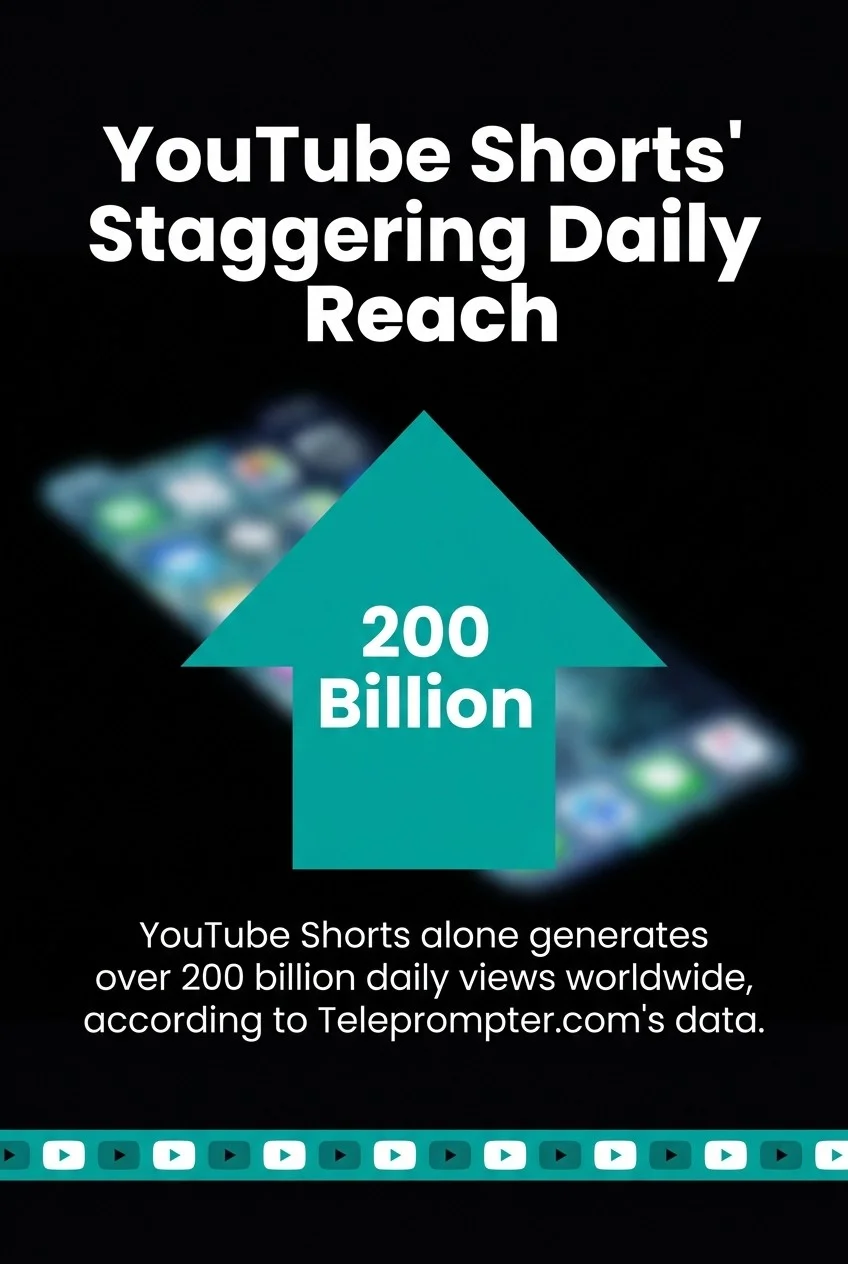
YouTube has approximately 2.7 billion monthly active users, per Global Media Insight, and YouTube Shorts alone generated over 200 billion daily views worldwide in 2025, according to Teleprompter.com's data. The audience is there. Getting your fitness video content in front of them takes deliberate effort. The goal isn't to persuade people to watch your videos, but to capture their attention in a saturated space and build trust.
For search optimization, include your primary keyword (the specific exercise, fitness goal, or problem you are solving) in your video title, description, and tags. Write descriptions that explain what the viewer will learn, not just what the video contains.
Creating great fitness video content takes time, which is why the most successful trainers look for ways to extend the value of every recording.
A single workout video can often be repurposed into several shorter pieces of content. You might turn key coaching points into Instagram Reels, extract technique demonstrations for YouTube Shorts, or share practical takeaways with your email list. This allows you to reach different audiences without constantly creating new content from scratch.
Repurposing also helps reinforce your message across multiple platforms and can become an important part of a sustainable content marketing strategy for personal trainers.
Once your content is published, promote it across the channels where your audience already spends time. Email your client list, share clips on social media, and direct viewers to related content to maximize each video's reach. For more content ideas that translate well to video, see our list of social media content ideas for personal trainers.
The fitness video strategy that works in month one will not be the same as the one that works in month six, and the data tells you exactly what to change. Track the metrics that connect to your actual business goals. Views measure reach. Watch time measures whether your content is holding attention. Comments and saves measure genuine engagement.
If you are using fitness video content to convert viewers into clients, track clicks from video descriptions and email signups from video-specific landing pages. These are the numbers that tell you whether your video content is working, not just being watched.
Not every fitness video will succeed for the same reason. A video designed to build awareness may attract thousands of views, while a client education video could deliver value to a much smaller audience.
Rather than judging every video by the same standard, measure success against the purpose you defined before filming. The most useful metrics are the ones that help you understand whether your content is moving your business forward.
Creating a fitness video strategy isn't a one-time exercise. The most successful trainers regularly review what's working and look for opportunities to improve.
Set aside time each month to review your content performance. Look for patterns in the topics, formats, and platforms that generate the strongest response from your audience. Over time, these insights can help you refine your content calendar, improve engagement, and create more videos that support your business goals.
Creating fitness videos isn't about chasing views. It's about consistently sharing valuable content that attracts the right clients and showcases your expertise.
The most successful trainers don't rely on random posts. They follow a clear strategy, publish consistently, and refine their approach over time based on what resonates with their audience.
Once those viewers become clients, the right systems make it easier to deliver an exceptional coaching experience. PT Distinction gives you everything you need: structured programs, client progress tracking, and seamless communication, all in one place. Start your free 1-month trial and see why thousands of trainers worldwide use PT Distinction to power their coaching business.
Ready to join the family?
We'll get you up and running in no time. Start with our zero-risk free trial and build your personal training empire today.